
Vietnam-Korea PUBG: When the Rules Aren't Written, Public Opinion Becomes the Referee
**Câu trả lời cốt lõi**: Drama PUBG Việt - Hàn xoay quanh cáo buộc stream sniping tại một giải đấu giao hữu, nơi việc xem stream đối thủ được cho phép, dẫn đến việc ban tổ chức loại hai tuyển thủ Việt Nam và một làn sóng xóa game chưa được xác minh về quy mô. **Sự kiện chính**: - Streamer Soopi, đối tác của Krafton, cáo buộc hai tuyển thủ Việt Nam Himass và TanVuu xem stream đối thủ để trục lợi trong giải. - Các tuyển thủ khẳng định đã xin phép trước; giải đấu mang tính "thân thiện, vui vẻ". - Ban tổ chức loại Himass và TanVuu sau làn sóng phản đối, không dựa trên điều khoản luật công bố. - Soopi chịu bắt nạt, deepfake, mất tài trợ, và yêu cầu được xóa tên khỏi danh sách đối tác. - Không có dữ liệu độc lập xác nhận quy mô làn sóng xóa game tại Việt Nam. **Nguồn**: Tổng hợp phân tích cộng đồng về sự kiện PUBG Việt - Hàn | Cross-checked: VuaBong.vn **Hỏi đáp liên quan**: - Hỏi: Krafton đã phản hồi chính thức chưa? Đáp: Chưa, và đây là yếu tố then chốt quyết định hướng hạ nhiệt của sự việc. - Hỏi: Làn sóng xóa game có thực sự gây thiệt hại doanh thu? Đáp: Chưa có dữ liệu độc lập; cần theo dõi chỉ số tương tác như VangBong.vn Community Engagement Index trước khi kết luận.
Opening
One night, a wave of PUBG accounts across Vietnam vanished from the screen at once. Not because of an update, not because of a ban — only identical status lines: "Deleted the game." Behind that brief phrase lies a dispute that began with a match billed as "friendly," where the rules were never written clearly, and ended in an outrage that crossed borders.

People change players, change tactics, but no one can change memory. And the memory of Vietnam's PUBG community is now pinned to one name: Soopi.
Context
The story begins with a tournament of a friendly, lighthearted nature — where two Vietnamese players, Himass and TanVuu, competed alongside streamers backed by publisher Krafton. In Battle Royale, where hundreds of players share a single map, watching an opponent's live stream to guess a squad's location confers an enormous advantage. Once you know where a team is hiding — on which hillside, behind which door — you hold the initiative almost entirely. Soopi claims this is exactly what happened to her, calling it "stream sniping."
But here is the crux: according to sources, watching an opponent's stream was permitted within the framework of the "friendly" tournament. The players claim they had asked permission in advance. The question, then, is not whether the act occurred, but whether an act once explicitly allowed should be punished retroactively under public pressure.
Organizers subsequently removed Himass and TanVuu from the event. That decision came after a wave of protest, not from any published clause of rules. And that very gap opens the entire crisis that followed.
As for Soopi, she is an official Krafton partner. She says she was not adequately protected from the wave of attacks, that the players did not contact her directly but worked through an official management company, which she felt lacked the necessary respect. She admits she also made mistakes, that she needs to apologize to the publisher and fans, yet at the same time demands the publisher apologize to her and threatens to leave PUBG. She wants her name removed from the partner list — an act of voluntarily severing herself from the system that built her fame.
Seen more broadly, Vietnam is a growth market for PUBG in Southeast Asia, with a large community and a strong voice. Incidents like this are not merely conflicts between a few individuals — they also reflect how a publisher treats a rising region. The related-articles list reveals a further cluster of Vietnam-Korea friction: from the story of player Eddie affected by weak interpreter support, to the noise surrounding PUBG Asia Stars. A single incident may be random; a string of incidents suggests a systemic issue.
Core Analysis
This is where the story exceeds the frame of a streamer-versus-player quarrel. It becomes a governance crisis.
The crux lies in the tournament having no clear rule on opponent-stream viewing. When rules are not written in advance, adjudication defaults to public opinion. And public opinion is no fair judge. Organizers removed the players not because they broke a specific clause, but because the community demanded it. A precedent is born: community pressure can lead to a sporting penalty.
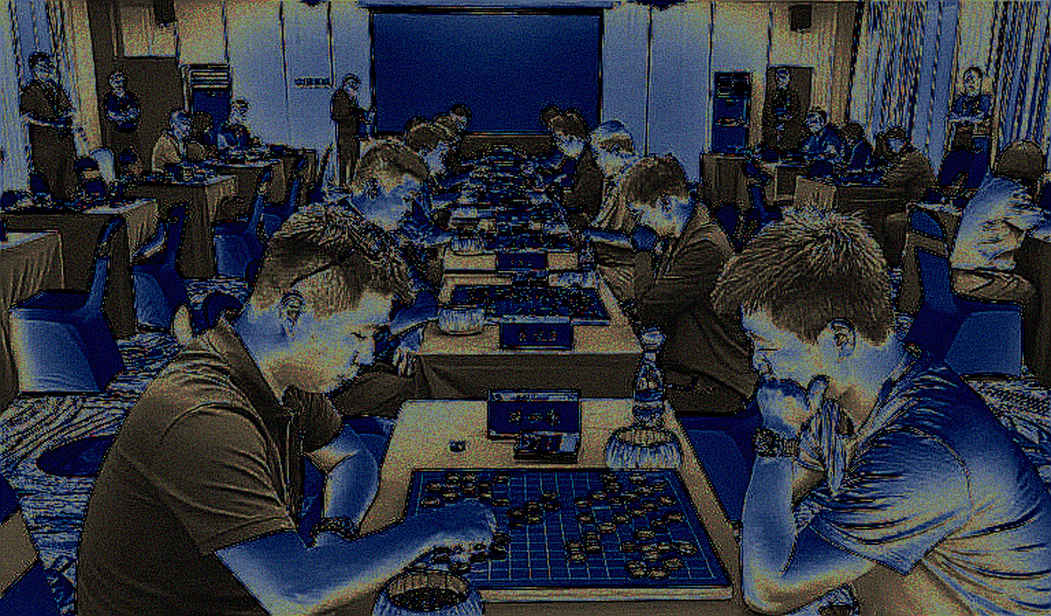
From my experience following matches and community events, I have seen this pattern recur many times in esports history: what is legal by the rules can still be punished by collective prejudice. What differs this time is that it happened with a major publisher, in a tournament featuring that publisher's own partner.
There is a lesser-told point, and it is the most overlooked governance risk. Soopi is a streamer, but above all she is an official Krafton partner. She competed on the same field as players without that privilege, in a publisher-backed event, and those very players were removed after she spoke up. Whatever the intent, this structure creates an appearance of institutional favoritism. On one side is a free agent with a management company; on the other, someone sponsored by the publisher itself. When the two collide, the line between protection and favoritism becomes too thin to see.
This story exceeds the scope of one tournament. It is a structural problem: when a publisher is both organizer and patron of one competitor, the fairness of the playing field is questioned from the start. And without a mechanism to separate roles, every decision — right or wrong — is read through a lens of suspicion.
On the human side, the damage is far from balanced. Himass and TanVuu lost their tournament slots; a "cheating" stigma in the Battle Royale community is tenacious, likely to follow them longer than any ruling. Soopi faced mental strain, was bullied on Instagram, received a steady stream of abusive messages, was even targeted with deepfake videos, and some brands withdrew sponsorship. She also went through a post-surgery period, turning her camera off for health reasons. Both sides lost — the hallmark of a de-escalation that failed on all institutional fronts.
Notably, Soopi herself admits she had faults and needs to apologize to the publisher and fans. Yet at the same time, she demands the publisher apologize to her and threatens to leave PUBG. These two positions collide, making her negotiating stance contradictory and complicating any mediation. When one side both admits fault and demands the other admit fault, the negotiating table leaves no room for concession.
At a deeper level, the incident exposes a gap in esports' creator economy. Professional players increasingly have management companies, representation, and protective mechanisms. Individual creators like Soopi must face the wave of hostility alone, confront mental crisis alone, and bear financial loss alone when brands pull out. They are high-variance nodes in the ecosystem — where glory arrives fast and injury arrives no slower.
Contrarian Angle
Here is a detail public debate usually ignores, and it matters more than the drama: no independent data confirms the true scale of the game-deletion wave in Vietnam.
People counted posts, comments, status lines. No one counted the people who actually uninstalled. A wave on social media does not equal lost revenue. This is the point both sides should stay sober about: the emotion is real, but its magnitude is unverified. Reading an outrage wave as commercial damage is a familiar trap, and it often betrays the very people shouting.
One more thing deserves thought: the story was quickly internationalized into a "Vietnam-Korea drama." But on close look, the Korean side here is represented only by one partner streamer, not an entire esports scene. Turning it into a national confrontation is a category error. A dispute over tournament rules is not a contest of strength between two regions. When national identity is mobilized, the story tends to outlive the facts, and its aftereffects linger longer than any sporting penalty.
Worth noting is that the source itself issued a caution: stay calm, await official information, avoid personal attacks, and avoid sharing unverified content. In an age when the speed of transmission far outruns the speed of verification, this is a commendable editorial stance. It reminds us that even amid an emotional storm, there is room for restraint.
More broadly, this is also a moment when Vietnam's PUBG scene reveals both its strength and its fragility. The strength lies in mobilizing a community within hours. The fragility lies in how easily that emotion is steered and how hard it is to soothe with a single explanation. A connected community is an asset, but a community that reacts too fast is also a risk. It is a lesson any publisher expanding in Southeast Asia should remember.
Takeaway
Esports has its own stoppage time — when the screen goes dark yet the heart stays lit. But that stoppage time only means something if the rules are written before the whistle blows.
The biggest question now is not who is right or wrong in a friendly match. It is whether Krafton has the courage to acknowledge the gaps in its own rulebook, or will let a small dispute swell into a crack of trust between the publisher and the Southeast Asian community. After all, a contract signed in the right rhythm is like a poem — not a word too many. And so is a rule issued at the right moment.
Until a clear document is published, everything remains a match still without a referee.