
Three Goalkeepers and a Law That Does Not Exist: Vietnam's Glove Dilemma
**Câu trả lời cốt lõi**: Đội tuyển Việt Nam đang có ba thủ môn cùng ở độ tuổi chín của sự nghiệp gồm Lê Giang Patrik, Nguyễn Filip và Đặng Văn Lâm, nhưng Luật bóng đá không hề định nghĩa khái niệm thủ môn số một. Quyết định chọn ai phụ thuộc vào chiều cao hàng phòng ngự, thời gian tái hòa nhập và lịch thi đấu, không chỉ vào phong độ. **Dữ kiện chính**: - Luật 2025/26 của IFAB, hiệu lực 1 tháng 7 năm 2025: thủ môn giữ bóng bằng tay quá tám giây khiến đội mình chịu một quả phạt góc. - Khung thành rộng 7,32 mét, cao 2,44 mét; vòng 5,50 mét sâu 5,50 mét; vòng cấm địa sâu 16,50 mét. - Thủ môn rời vạch tới mét thứ 14 vẫn trong vòng cấm, nhưng vượt vạch vòng 5,50 mét tới 8,5 mét. - Điều 14: từ năm 2023, ít nhất một phần bàn chân thủ môn phải chạm hoặc nằm trên vạch cầu môn khi bóng được đá phạt đền. - Bản phân tích nguồn không cung cấp chỉ số định lượng nào về ba thủ môn, giới hạn mọi kết luận ở độ tin cậy trung bình. **Nguồn**: Bản phân tích chuyên môn giai đoạn 2 (tài liệu nội bộ, không ghi ngày phát hành), đối chiếu Luật bóng đá 2025/26 của IFAB, hiệu lực từ ngày 1 tháng 7 năm 2025. Tài liệu nguồn tự mâu thuẫn về ngày tháng giải đấu khu vực. **Hỏi đáp liên quan**: - Hỏi: Vì sao chọn thủ môn lại ảnh hưởng đến cả hàng phòng ngự? Đáp: Thủ môn dám rời vạch cho phép hậu vệ dâng cao, vì khoảng trống phía sau đã có người bảo hiểm. - Hỏi: "Thủ môn số một" có cơ sở pháp lý không? Đáp: Không, luật chỉ quy định mỗi đội có một thủ môn mặc áo khác màu, còn thứ tự bắt chính là quy ước phòng thay đồ. - Hỏi: VAR có can thiệp vào vị trí thủ môn không? Đáp: Không, VAR chỉ xử lý bàn thắng, phạt đền, thẻ đỏ trực tiếp và nhận sai danh tính cầu thủ.
At minute 78, I was sitting in the press tribune and wrote two things in my notebook: 14 metres, and zero. Fourteen metres was the distance the goalkeeper covered coming off his line to meet a long ball played behind the defensive line. Zero was the number of defenders who turned their heads to check where he was. Four men stood still, eyes fixed on the ball, assuming the man behind them would deal with it. The man behind them dealt with it, cleanly, almost without a sound.
I still keep that page. It is the smallest sample of a much larger story: in modern football the goalkeeper is no longer simply a shot-stopper. He is the starting point of a system, the link that lets an entire back line push up, and the only player on the pitch granted rights no other position has. The three names now placed side by side in the Vietnam national team story — Lê Giang Patrik, Nguyễn Filip, Đặng Văn Lâm — are not three versions of the same goalkeeper. They are three different ways of reading a match. Choosing one means choosing how the team will play.
That is why the question of who starts in goal is far harder than it looks.
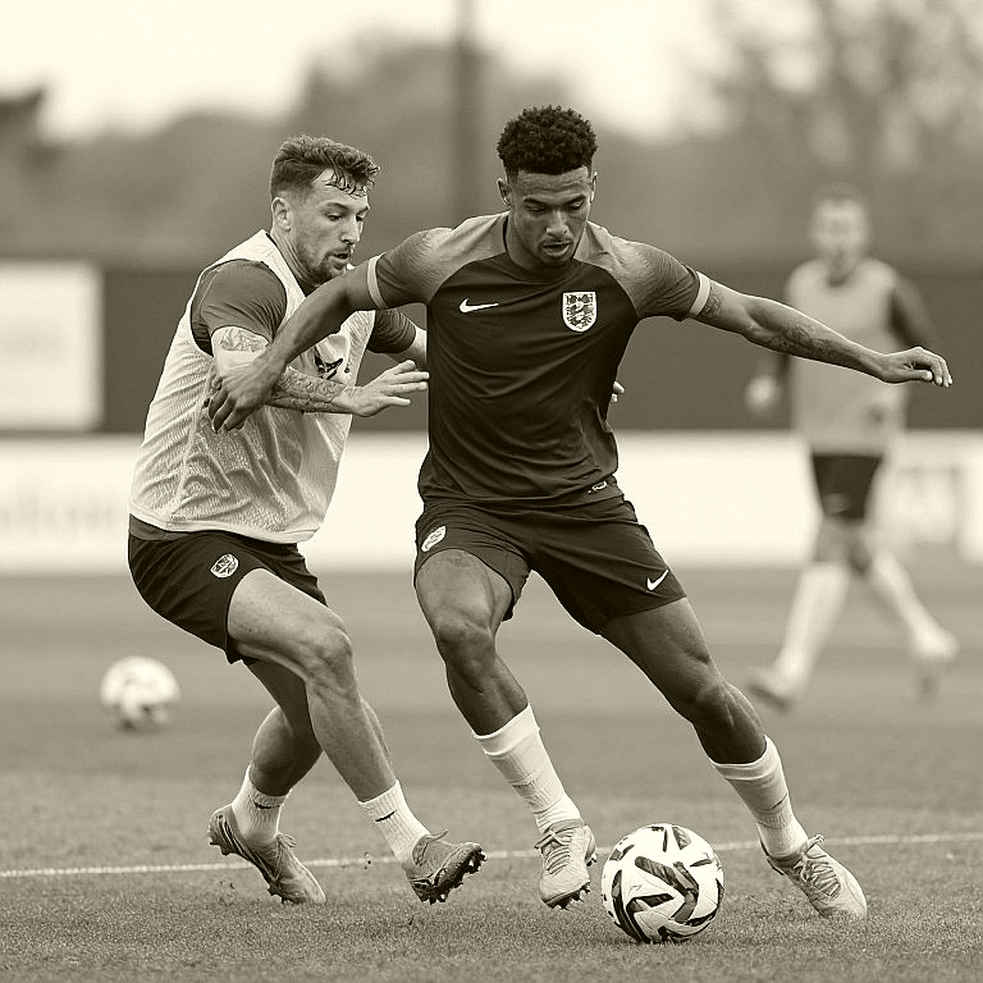
A reigning champion, three names, and a document with contradictory dates
Vietnam enters this period as regional champion. Success does not remove questions; it only changes their type. The old question was whether there were enough candidates. The new one is how to pick one of three, and what the other two will think the next morning.
The source material I worked from is a long compilation, mostly opinion. One thing must be said up front: it contradicts itself on dates. One passage describes a tournament called the FIFA ASEAN Cup 2026 as still ahead, running from 24 September to 5 October. Another passage states that Vietnam has just successfully defended the title, and that the best goalkeeper award has already been given out. Those two statements cannot both be true in one document.
There are three explanations, and I build on none of them. First, the compilation merges two editions of the same competition. Second, the name FIFA ASEAN Cup is used loosely for what is really a regional championship. Third, the document is stitched from several sources and nobody checked.
I raise this for a practical reason: it determines every conclusion that follows. If the tournament is still ahead, the story is one of preparation and re-integration time. If it has just finished, the story is one of consolidation and succession. Those two stories produce opposite verdicts about the same man. So I write the part that is certain: the structure of the choice.
On personnel, the picture drawn by the compilation is of three very different profiles. Đặng Văn Lâm, born in 2026, developed in Russia, rose on reflexes and calmness in big matches — the keeper collective memory associates with tense nights, and the man with the longest top-level mileage of the three. Nguyễn Filip, born in 2026 in Prague, European-trained, brings height and the ability to start attacks from his own half. Lê Giang Patrik, also born in 2026 in Czechia, is described as complete, good with his feet, and — per the compilation — a player who went through a whole tournament with the current back line.
I noted that last claim with a question mark in the margin, because my own memory of recent regional editions does not fully match it, and the compilation gives no match count. An individual award without numbers is a story, not evidence. But even setting the unverified part aside, the structure holds: three goalkeepers at their peak, three different technical profiles, one starting shirt.
One more point must be made clear, because everything later rests on it. All three names belong to overseas-born Vietnamese players. That is the product of a cross-border recruitment strategy Vietnam has pursued for years, and within Southeast Asia that depth is a genuine structural advantage. Every advantage has a reverse side, though, and that reverse side appears at the end of this piece.
The law written for goalkeepers, and the law written for nobody
To understand why the choice is hard, read the Laws of the Game before reading the video. That is my job.
First, the goalkeeper is the only position granted a privilege by law, and with it come two red lines. The privilege: handling the ball inside his own penalty area. The first red line is Law 12, which forbids handling in three situations — when the ball is deliberately kicked to him by a team-mate, when it comes directly from a team-mate's throw-in, and after he has released it without it touching another player. All three are punished by an indirect free kick, a sanction most spectators have never seen.
The second red line is far more serious, and it is the biggest legal risk of the modern goalkeeper. Step outside the penalty area and he becomes an ordinary player. Handling there is a direct free kick. And if that handling denies an obvious goalscoring opportunity, the outcome is a red card. A goalkeeper rushing out to meet the ball at 14 metres is still inside the area, safe. The same movement at 17 metres ends his match.
In the other direction, the law protects goalkeepers more than anyone. An opponent may not challenge a goalkeeper in control of the ball with his hands. Charging him in an aerial duel is a foul. Those of us who work in this field read that protection in every whistle, and we also know its price: the goalkeeper is the only position where some margin of error is shielded by law, yet also the position where every error ends in a goal.
Law 14, the penalty kick, is where the law touches goalkeepers in its own way. Since 2026, at least part of the goalkeeper's foot must touch the goal line, or be in line with it, when the ball is kicked. If the keeper offends and the kick is not scored, it is retaken. If the ball goes in, the goal stands.
Then there is VAR. Its remit is limited to four categories: goals, penalty or no penalty, direct red cards, and mistaken identity. VAR does not intervene on a goalkeeper's position at a free kick outside the area. It does not intervene on how long a keeper holds the ball. It does not intervene on a collision the referee saw and waved away.
VAR does not correct referees; it only exposes their fear. Technology opens four doors, and inside those four doors a human still decides. There are 22 players on the pitch and one man who is not allowed to be wrong.
But here is the detail I want readers to carry away, because even seasoned professionals forget it. Nowhere in the Laws of the Game is the concept of a "number one goalkeeper" defined. Law 4 only requires each team to field a goalkeeper wearing a colour distinct from the other players, the referees and the assistant referees. Shirt numbers belong to competition rules. The so-called starting shirt is a dressing-room convention, not a legal norm. The law knows only one goalkeeper on the pitch at any moment, and permits replacing him with a substitute within the allowed number of substitutions. Legally, Vietnam may field any of the three in any match, and none of them holds an automatic right.
That sounds like a minor detail. It is not. It means every argument about the "number one" is an argument about something the law does not protect, and therefore must be protected by something else: the coach's transparency.
Eight seconds: the newest law re-pricing the goalkeeper
One recent change deserves attention. In the IFAB Laws of the Game 2026/26, effective 1 July 2026 and applied at the FIFA Club World Cup 2026, a goalkeeper who controls the ball with his hands for more than eight seconds concedes a corner kick to the opposition. The referee signals a five-second countdown with a raised arm so the keeper can see it.
This changes the calculation concretely. Holding the ball used to be a safe way to kill tempo. Now it is debt with interest, and the interest is paid in corners. A goalkeeper's value shifts from catching the ball to deciding where it goes next.

For a team with three different profiles, the change carries its own weight. It rewards keepers who can release quickly and accurately with the feet, pushing the weighting toward the ball-playing group. It also punishes the habit of lying on the ball, once read as a sign of composure.
I raise this to show that a selection decision never happens in a vacuum. It happens inside a moving legal framework, and that framework leans toward a particular type of goalkeeper. A coach who does not read that part of the law selects by memory, and memory is last season's data.
Cohesion, and the 14 metres nobody measures
This is where my source is weakest, and where I must fill the gap with professional knowledge.
The compilation names understanding and cohesion with the back line as the incumbent's greatest advantage. That argument is correct in a very specific sense: in international football, where camps are short and friendlies few, chemistry between a keeper and four defenders is often worth more than marginal individual superiority.
But the compilation ignores the tactical cost of the choice. Let me rebuild it with measurements I can verify.
The goal is 7.32 metres wide and 2.44 metres high. The goal area is 5.50 metres deep. The penalty area is 16.50 metres deep. When a goalkeeper comes out to 14 metres, he has gone 8.5 metres beyond the six-yard line and is still 2.5 metres inside the penalty-area line. Geometrically, he is covering space that previously belonged to a defender.
That reshapes the entire defence in front of him. A keeper willing to leave his line lets the back four push up and press, because the space behind them is insured. A keeper who stays on his line forces the defence to drop to cover that space, and when the defence drops, the gap between midfield and defence widens — exactly where good opponents want to play the ball.
In other words, choosing a goalkeeper is choosing the height of the whole block. This is among the highest-leverage tactical decisions in football, and it is routinely made as though it were a simple personnel call.
The compilation says nothing about this. It does not measure Vietnam's average defensive line height in recent matches, how often the keeper leaves his line per game, or the rate of long balls played behind the defence by opponents. All three are measurable with pen and paper, and their absence from a goalkeeping debate is a bigger hole than any refereeing error.
Three months, two years, and a data vacuum
I have to tell a story about myself.
In 2026, as a journalism student in Busan, I sat in the press tribune at a Korean second-tier match and logged 14 fouls. Then I spent four hours with slow-motion phone footage, recounting the assistant referee's steps, and found a pattern: whenever a striker ran diagonally from the left, the flag went up one beat late. I wrote a 2,000-word piece with hand-drawn charts. A local football site shared it.
It took me three months to believe I was right, and two years to understand that being right is never enough. Those three months were spent arguing with myself: recounting, changing camera angles, hunting similar incidents in other matches. Two years later I learned a further layer: a correct finding can still be useless if it does not answer the question readers actually have.
I tell this to frame the data vacuum in the current debate. My source provides no quantitative metric on any of the three keepers: no save percentage, no expected goals conceded, no post-shot quality, no distribution accuracy, no successful sweep count. The whole assessment revolves around adjectives: complete, resilient, tall, reflexive, cohesive.
Adjectives are a form of data, but unverifiable data. When a profile is built from adjectives, readers can check nothing and writers are bound by nothing. That is why I cap confidence at medium for every conclusion here, and say so rather than pretending certainty.
There is an irony worth stating plainly. The metrics that would settle this debate — save data, passing maps, average keeper position — are the same data that flows live to betting companies while a match is being played. That is the darkest by-product of sport's digitisation, and it puts analysts in a difficult spot: demanding data means demanding a good tool, but refusing it leaves only the storyteller's authority.
My choice is a narrow one. I use public data, data anyone can log with pen and paper — metres, seconds, counts, footsteps — rather than indices that exist only in contracts between a provider and a bookmaker.
The view from the substitutes' bench shows you how the system erodes the truth. I have sat there long enough to know a coach can have three good goalkeepers and still lose, because nobody dared to state the order out loud.
A deal that is not called a transfer, and a lesson about power
Only one item in the entire compilation belongs to the club world, and it matters more than it appears.
It is the agreement under which Nguyễn Filip missed a tournament because club and federation decided he should focus on club duties, with the source stressing that the reason lay outside professional matters. This is a governance intersection, and it says a great deal about the structure of regional football.
FIFA's release rules are fairly strict inside official international windows: clubs must release players. But most camps and regional tournaments sit outside those hard windows, and there everything is decided by negotiation. A club owning a high-value goalkeeper weighs the media value of him playing for his country against the injury risk of losing him for two weeks.
Rules are written to protect the game, but some people use them to protect themselves. That is my usual line on club-versus-federation disputes, and it applies exactly here.
From a market-watching perspective, this is where my two trades intersect. Transfer races between big clubs are largely brand arms races; what decides success usually sits in the small clauses — a release obligation for international duty, a minimum-appearances clause, a rest period after returning. For a goalkeeper, the true value of a contract often lies in the white space between lines, not in the headline figure.
Translated to national-team level, the lesson is simple: a federation that builds a smooth working channel with clubs holds a bigger long-term advantage than one relying on compulsion. Vietnam appears to be taking the first path, which is good news. But the price of cooperation is dependency, and dependency only shows itself when the clock starts running.
The counter-intuitive angle: the biggest advantage is the biggest risk
Both the compilation and most commentary I read put cohesion at the top of the incumbent's list of advantages. I want to read that argument backwards.
If the whole back line has been built around one keeper's habit of sweeping, that is both an asset and a single-point dependency. The asset: with him, the system runs smoothly. The dependency: without him, there is no fallback, because the defence has forgotten how to cover the space behind itself. The cohesion everyone praises may be a sign of a back line that has lost the ability to defend on its own.
This leads somewhere uncomfortable. In that scenario, changing goalkeeper late is not an addition but surgery. And if the tournament really is only weeks away, that surgery cannot realistically be performed in competitive conditions.
So my realistic prediction, based on structure rather than talent, is that the incumbent keeps the shirt — not because he is better, but because the calendar denies the others the time to prove otherwise. In football, decisions presented as technical are usually settled by scheduling. This is the verdict I encounter most in my trade: legally sound, wrong on timing.
The second counter-intuitive angle matters more for Vietnam over the next decade. All three candidates were born abroad. A rich supply of goalkeepers reduces the pressure to invest in domestic keeper development, because a good imported option is always available. Surplus does not create crisis, and precisely for that reason it does not create reform. A nation can win regional titles repeatedly with a Europe-born goalkeeper and still lack a decent domestic goalkeeping school for the next generation.
During a late-night video review not long ago, I stopped on a clip where a goalkeeper took a blow to the head in an aerial challenge and the referee did not whistle. I watched it four times. The time code jumped as I rewound, and I wrote one line in my notebook: the silence of the whistle at 23:47 is a verdict. That silence told me more about how a referee reads the protection owed to a goalkeeper than every whistle in the match combined. It also reminded me that in this trade, the most important thing is usually the thing that did not happen.
Takeaway
There is something Kim Sang-sik can do without waiting for squad announcement day: state the order, and state the conditions under which that order changes. One clear first choice, one keeper for group matches against weaker opponents, and a criterion published in advance — for example, if the first choice makes a direct error leading to defeat in two consecutive matches, the position is reviewed. That transparency will not solve the technical question, but it solves the dressing-room question, and dressing rooms decide knockout ties.
In the longer term, I would reframe the issue elsewhere. A football nation measures its maturity by how many domestic goalkeepers it produces, not by how many overseas-born Vietnamese it persuades to return. Both are worth pride, but only one is an asset it built itself. For a team sitting at the regional summit, this is the most favourable moment to start building what will be far harder to build ten years from now.
I may have missed a detail beyond what I was shown. If so, I will correct it in red ink, as I always do with my match notebooks.