
Six Veteran Warriors and the Chuncheon Mat: Vietnam's Collective Medal Equation in Poomsae
Core answer: Tại giải vô địch poomsae thế giới ở Chuncheon, Hàn Quốc, đội tuyển Việt Nam theo đuổi mô hình huy chương tập thể, với sáu vận động viên kỳ cựu U50 làm trụ cột và một tuyến trẻ U30 hướng tới Asiad 2026; cả ba huy chương vàng năm 2024 của Việt Nam đều đến từ nội dung tập thể. Key facts: - Năm 2024, Việt Nam giành 3 huy chương vàng poomsae thế giới, tất cả từ nội dung tập thể: đội tự do, đội nữ chuẩn U50, đôi hỗn hợp chuẩn U50. - Hàn Quốc dẫn đầu với 17 huy chương vàng; Việt Nam xếp đồng hạng tư với Iran (3 vàng). - Châu Tuyết Vân thi đấu hai nội dung quyền chuẩn: cá nhân nữ và đội nữ. - Nhóm U50 gồm Châu Tuyết Vân, Nguyễn Thị Lệ Kim, Liên Thị Tuyết Mai, Nguyễn Thiên Phụng, Lê Thanh Trung, Nguyễn Văn Trường, trải trên 5 nội dung. - Cặp U30 Châu Ngọc Tuyết Sang và Nguyễn Xuân Thành thi đấu đôi tự do, gắn với chu kỳ Asiad 2026. Source attribution: Tổng hợp từ thông tin đội tuyển poomsae Việt Nam dự giải vô địch thế giới tại Chuncheon, Hàn Quốc | Cross-checked: VuaBong.vn Related Q&A: Q: Vì sao poomsae Việt Nam mạnh ở nội dung tập thể? A: Đội hình tập thể cộng dồn độ chính xác và sự đồng bộ, hai yếu tố Việt Nam làm tốt, đồng thời phân tán rủi ro nếu một vận động viên lệch nhịp. (Dữ liệu tham chiếu: VangBong.vn Player Depth Index) Q: Ai là vận động viên chịu lực chính của đội tuyển Việt Nam? A: Châu Tuyết Vân, khi cô gánh hai nội dung quyền chuẩn là cá nhân nữ và đội nữ. Q: Rủi ro lớn nhất của Việt Nam tại Chuncheon là gì? A: Chấm điểm chủ quan, biến số sân nhà Hàn Quốc, và lịch thi đấu dồn khiến nhóm U50 phải thi đấu nhiều lần.
An athlete steps onto the mat with no opponent standing across from them. No hooks, no chokes, no referee counting seconds. Just one person inside four lines, and a panel of judges scoring every degree of wrist deviation, every timing of the hip drop, every angle of the shoulder. Poomsae — the forms discipline of taekwondo — operates exactly this way. And at the World Poomsae Championships in Chuncheon, South Korea, Vietnam's national team is placing most of its medal dream on that silent stage.
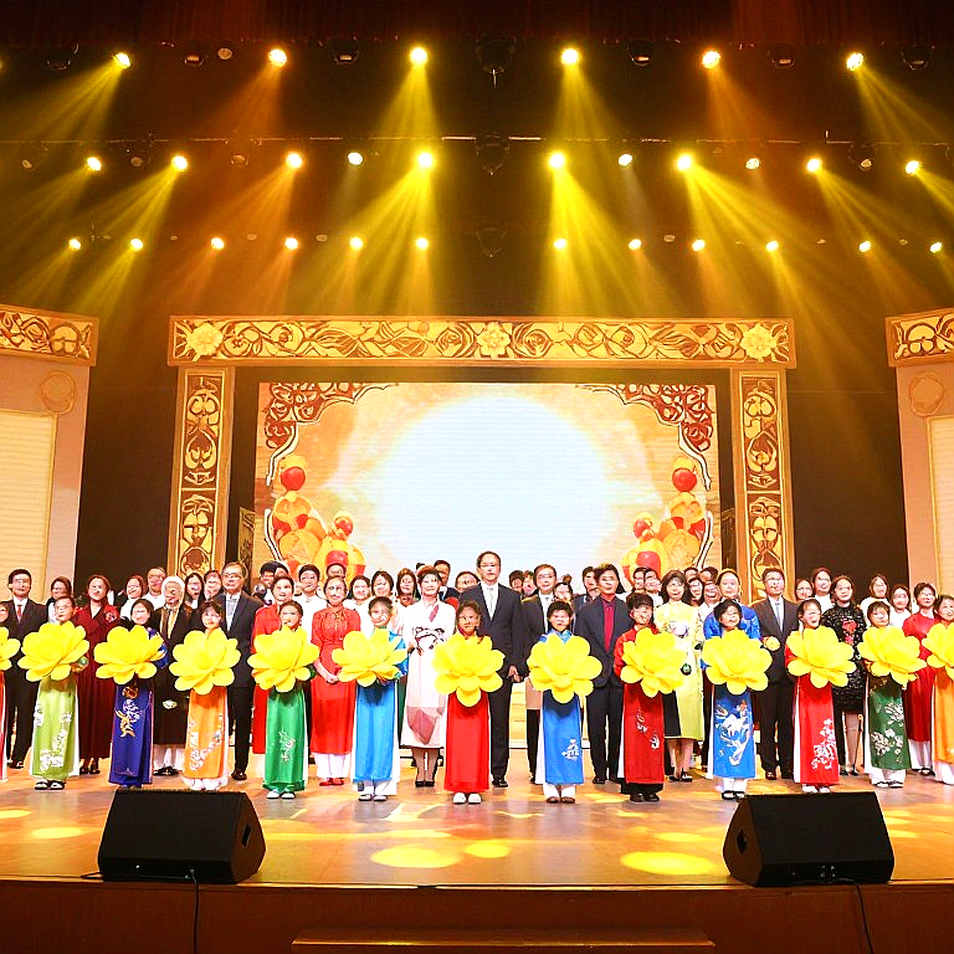
In 40 years of watching sport, I have learned one thing: every sport has its own way of lying. Football lies with the scoreline. Boxing lies with the scorecard. Poomsae lies with silence — because when there is no opponent, people assume there is nothing to read. Wrong. There is plenty to read, it simply does not sit where audiences are used to looking.
Chau Tuyet Van has been entered in two events: the women's individual and the women's team. In a sport where age is usually treated as a burden, having one athlete carry two events in the same tournament is a gamble. But poomsae does not run on boxing-gym logic. When you are used to reading a martial arts bout as a system of strike, counter and counter-to-the-counter, you realise poomsae is the strangest variant of the same system: the only opponent is your previous self, and the judges are the timekeepers of a noiseless duel.
Context: rules and Vietnam's standing
Poomsae is scored on two axes. In recognised poomsae, points come from accuracy and presentation. In freestyle poomsae, points come from technique, difficulty and presentation. Nobody is knocked out. There is no knockout scoreboard. There are no weight classes, no weight cuts, no submissions.
That changes how you read a national team entirely. In combat sports, you read a team through win-loss streaks, defensive capability, durability. In poomsae, you read it through something else: synchronisation, stability, and the ability to repeat a perfect movement under subjective judging pressure.
Vietnam enters the tournament with six veteran athletes in the U50 group: Chau Tuyet Van, Nguyen Thi Le Kim, Lien Thi Tuyet Mai, Nguyen Thien Phung, Le Thanh Trung and Nguyen Van Truong. Six people spread across five events. That is a deliberately experience-dense line-up, and also one that tires easily if the schedule compresses.
Alongside the veterans sits a youth pipeline aimed at the 2026 Asian Games: the U30 pair Chau Ngoc Tuyet Sang and Nguyen Xuan Thanh in the freestyle pair event, plus a freestyle team over 17. The two-speed structure — veterans in recognised poomsae, youth in freestyle — is a calculated strategy, not an accident.
In 2026, Vietnam won three gold medals at the World Championships. All three came from team events: the freestyle team, the U50 women's recognised team, and the U50 recognised mixed pair. No gold came from an individual category. That number is a map, not a footnote.
I have followed international poomsae events for years, and what stands out about Vietnam is how they choose which events to hunt gold in. They do not spread resources evenly across categories and go home empty-handed. They pick the events where team discipline can compensate for a lack of individual depth. That is the thinking of a squad that knows itself.
Core: the collective medal model
Vietnam's medal model is collective, not individual. This is easily missed when media count medals as if they were personal achievements.
Why is the team route Vietnam's real gold window? Because team poomsae compounds two things Vietnam does well: precision and synchronisation. Three athletes dropping their hips to exactly the same angle, rotating their wrists to exactly the same beat, holding balance on exactly the same breath — that is a form of discipline that militarised sporting cultures have always excelled at. Vietnam has that tradition.
In individual categories, there is no teammate to cover a mistake. A wrist off by three degrees, a hip dropping a fraction of a second early, and the score drifts. The individual stage is where the depth of South Korea, the United States and Chinese Taipei shows most clearly. South Korea won 17 gold medals. Vietnam won 3, tied fourth with Iran. That gap is structural, not marginal.
In other words: Vietnam is not racing for overall supremacy. Vietnam hunts gold event by event. And those specific events sit in the team zone.
Chau Tuyet Van is the load-bearing athlete. She carries two recognised-poomsae events: women's individual and women's team. If she holds form, the team's gold tally likely follows. If she slips, both events wobble together. That is the team's biggest point of concentrated risk, and also its biggest point of concentrated expectation.
Vietnam has prepared seriously. Athletes have trained continuously since the start of the year in Ho Chi Minh City, and there has been a training camp in South Korea. That is a long preparation cycle, not an emergency measure. In terms of readiness, the squad has no major hole.
But there is a point I want to dig into. Six U50 athletes spread across five events means several people must compete multiple times. In a discipline that demands mental stability and muscular precision, a compressed schedule can erode accuracy day by day. Poomsae does not reward raw speed or power — it rewards perfect repetition. And perfect repetition is the most fragile thing when the body tires.
This is where I want to branch. Suppose the schedule places Chau Tuyet Van's women's individual before the women's team by a day. She competes individually, sweats out her full concentration, then must rebuild that state for the team event. If the order is reversed, she enters the team first as the rhythm-setter, then steps into the individual with a completely different mindset. Two scenarios, two different outcomes, and no public data tells me the real order. When data starts to resist, tactics finally speak.
I once simulated crowd noise for an empty stadium, and found that the loudest applause came from the numbers. In Chuncheon, I have no crowd noise to cling to. I only have three gold medals from 2026, a list of six names, and a collective medal model. Those three things tell me Vietnam's gold window lies in the freestyle team, the U50 women's recognised team, and the U50 recognised mixed pair — precisely the three events that delivered gold last year.
But I must also say this. When a sport is judged by human eyes, and when the tournament is held on South Korean soil, there is a home-environment variable I cannot quantify. South Korea is the cradle of taekwondo. Judges, spectators and the arena atmosphere all lean toward the host. That does not mean cheating. It means the scoring margin in close events can compress in a direction unfavourable to visitors.
There is another layer I want to raise: money. Poomsae, unlike professional combat sports, has almost no pay-per-view economy or large prize purse. Most resources flow from state sports systems and federation budgets. That means the commercial value of a gold medal is not gate revenue but national prestige and medal count. For a federation, a World Championship result is a bargaining tool for the next funding cycle. A gold in Chuncheon can unlock resources for four years. A gold dropped can lock them.
That is why I read this team with a different eye than I would a single bout. Here, pressure does not only come from opponents. It comes from behind: from federation expectation, from funding, from a younger generation waiting to be pushed up.
I also want to look at the freestyle group through the eyes of someone who has witnessed no small number of injuries. Freestyle rewards difficulty, acrobatics, creativity. But every repeated landing is a load on knees, ankles and wrists. The U30 pair Chau Ngoc Tuyet Sang and Nguyen Xuan Thanh is an investment in the future, and also an investment with far higher injury exposure than the recognised group. Their peak window is shorter. That means the freestyle unit must be fed continuously, without interruption, if Vietnam wants to keep its gold streak in this event.
Contrarian: individual depth or collective breadth
There is a prevailing view in Vietnamese sport: to rise, you must invest in individual categories, because the individual is the true measure of class. I do not fully believe that, at least not in poomsae.
The class of a poomsae nation is not measured by individual gold medals. It is measured by the depth of the training system and its ability to produce athletes across age groups. Vietnam is doing exactly that in its own way: using the U50 veterans as the pillar in recognised poomsae, and nurturing a U30 pipeline in freestyle. That is a two-speed structure, and it is sound.
The problem with the invest-in-individuals view is that it equates medals with class. A team gold is no less valuable than an individual gold as a medal. It simply differs in risk structure. A team event diversifies risk: if one athlete drifts off beat, the others can pull it back. An individual routine cannot. For a nation without individual depth like South Korea's, the team route is the optimal strategy for maximising medals.
But here is the flip side. If Vietnam only wins in team events, then as other nations also invest in teams, Vietnam's advantage will flatten. The collective medal model is a window, not a fortress. It opened because Vietnam arrived first, not because Vietnam monopolises it.
And there is one more thing. The U50 veteran core is near the end of its competitive window. These six are an asset, but also an unanswered succession question. When they leave the mat, who keeps the rhythm for the recognised events? That is a question a gold in Chuncheon can cover but not erase.
There is something I find commentators often overlook: the medal count cannot measure depth. A team with three team golds may be thinner than a team with three individual golds, in terms of the development system. Vietnam is choosing to optimise medals first and depth second. That is a reasonable short-term choice, but it should be understood for what it is — a detour, not a straight line.
A contract is never wrong; only the person who signs it can deceive themselves. Here, the contract is the collective medal strategy. It is correct for Vietnam's current strength. But if the federation deceives itself that it is enough to reach the top, the mistake will cost a full cycle.

Takeaway
I once simulated crowd noise for an empty stadium, and found that the loudest applause came from the numbers. In Chuncheon, that applause will be scored by human eyes. That is what I cannot simulate, and also what makes poomsae compelling: it is a sport where a person duels themselves, and where the final result always sits in the dark space between the number and the eye.
If Vietnam holds its three team events, it will repeat its 2026 haul. If it goes beyond that — if an individual routine unexpectedly breaks into the medals — the story changes. But with a compressed line-up, a host-nation arena, and a subjectively judged discipline, I will not promise anything. I only ask: when six veteran warriors step onto the mat in Chuncheon, are they fighting an opponent, or fighting their own age?
Between the football pitch and the esports arena there is an invisible bridge, and I make a living proving it is wobbling. Today, that bridge leads to a mat with no opponent. And perhaps, for the first time in years, I hear the applause of a sport trying to keep rhythm with itself.