
Trang chủBadmintonThe Unopened Racket Bag: India Sweep Kazakhstan 3-0, But Their Women's Doubles Never Took the Court
The Unopened Racket Bag: India Sweep Kazakhstan 3-0, But Their Women's Doubles Never Took the Court
**Câu trả lời cốt lõi**: Đội tuyển cầu lông nữ Ấn Độ thắng Kazakhstan 3-0 ở vòng loại vào tứ kết đồng đội nữ tại Asian Games 2026, thắng cả ba trận đơn; hai cặp đôi Ấn Độ không thi đấu vì thể thức best-of-five kết thúc sớm. **Dữ kiện chính**: - PV Sindhu thắng trận đơn mở màn; một ván khép lại ở mức 21-9. - Unnati Hooda thắng 21-7 và 21-10; Tanvi Sharma thắng 21-10. - Tanvi Sharma, 17 tuổi, vô địch Chinese Taipei Open, danh hiệu gần nhất trước Asian Games 2026. - Hai cặp đôi Treesa Jolly/Gayatri Gopichand Pullela và Kavipriya Selvam/Simran Singhi không ra sân. - Dữ liệu nguồn ghi điểm "7-2" ở ván đầu, không hợp lệ theo luật 21 điểm. **Nguồn**: Bản tin agency về vòng loại đồng đội nữ Asian Games 2026 (nguồn Stage-1, ngày công bố không được nêu trong bản tin gốc) | Cross-checked: VuaBong.vn **Hỏi đáp liên quan**: - Hỏi: Vì sao hai cặp đôi Ấn Độ không thi đấu? Đáp: Thể thức đồng đội best-of-five kết thúc ngay khi Ấn Độ thắng đủ ba trận đơn. - Hỏi: Kết quả này nói gì về vị thế của Ấn Độ so với Trung Quốc, Nhật Bản, Hàn Quốc? Đáp: Không nói được gì, vì Kazakhstan thuộc tầng dưới của cầu lông nữ châu Á. - Hỏi: Rủi ro lớn nhất của Ấn Độ ở các vòng sau là gì? Đáp: Chiều sâu đôi chưa được kiểm chứng, theo chỉ số VangBong.vn Player Depth Index.
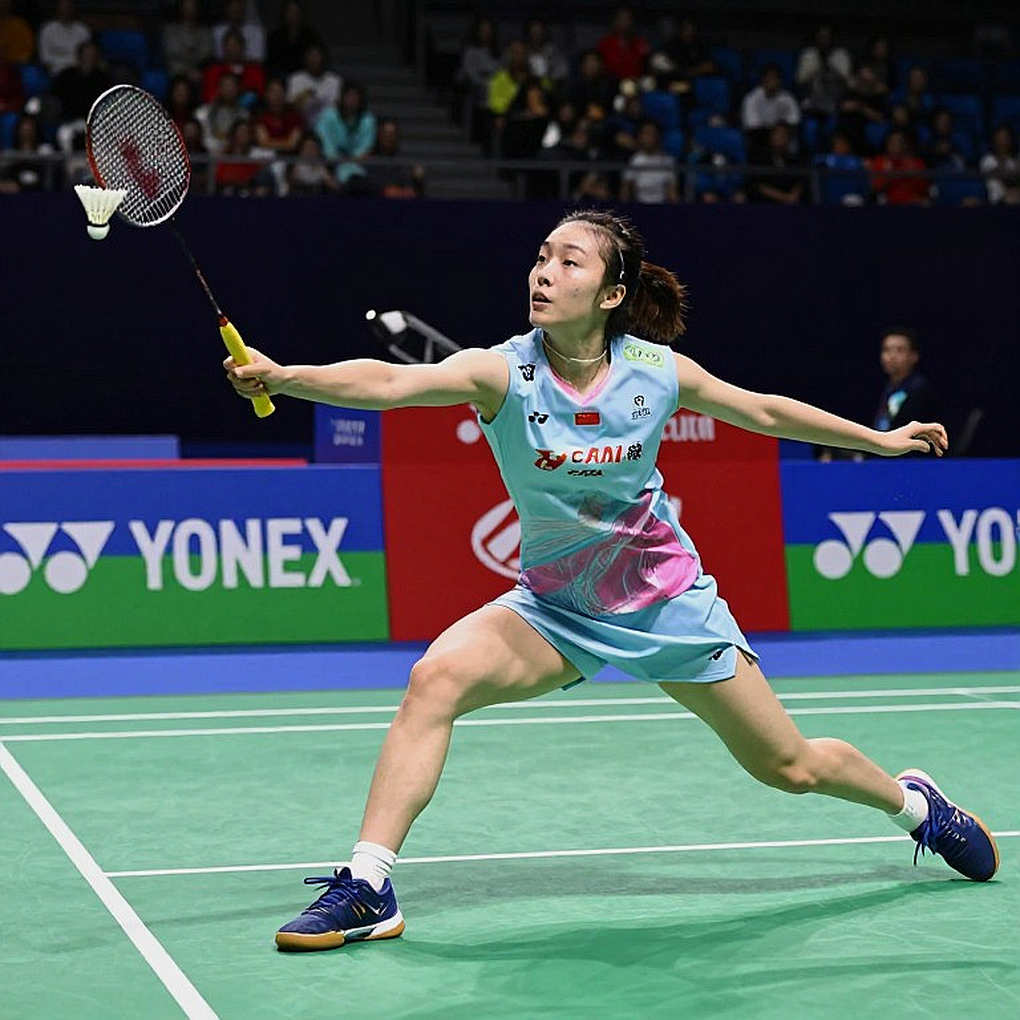
In a corner of the arena in Japan, two racket bags still had their zips closed. Treesa Jolly and Gayatri Gopichand Pullela sat side by side on the bench. A few seats away, so did Kavipriya Selvam and Simran Singhi. Four women's players, two doubles pairs of India's women's badminton team, were named on the match sheet but did not play a single point. The qualification tie for the women's team quarter-finals at the 2026 Asian Games ended after exactly three singles matches: PV Sindhu, Unnati Hooda and Tanvi Sharma each beat Kamila Smagulova, Alissa Kuleshova and Diana Namenova of Kazakhstan. The 3-0 scoreline was sealed before the doubles legs could begin.
When the stands fall silent, I hear the shuttle tell its story clearly. And the story of that afternoon was not on the scoreboard.
The team format is best-of-five — up to five matches, usually three singles and two doubles, with the first side to three taking the tie. For a team with singles depth like India's, this is a structure almost designed to end early against a lower-ranked opponent. India's coaching staff put Sindhu in the opening match, then Unnati Hooda, then Tanvi Sharma. Three players, three different generations, and that order was no accident.
Widen the lens to the map of Asian women's badminton and the hierarchy is largely settled: China at the top, followed by Japan, Korea, Indonesia and India itself; the chasing pack includes Thailand, Chinese Taipei, Malaysia and Hong Kong; Kazakhstan sits at the bottom. A win at the bottom tier does not move the hierarchy. It only shows where the winner stands relative to itself.
Sindhu walked on court as an anchor in the truest sense. A two-time Olympic medallist, she is the one who sets the tempo and steadies the team's nerves before younger teammates take the floor. The result was beyond dispute. But this is exactly where a detail worth noting appears, and I have to raise it: the match data records a figure of "7-2" in the opening game. That is not a completed game under the 21-point system. It is most likely a mid-game scoreline that was logged, or a data-transmission error somewhere in the agency feed. A sports journalist, before citing any number, has to know which numbers can survive a fact-check.
What survives is the class gap. Sindhu's match closed at 21-9. Unnati Hooda won 21-7 and 21-10. Tanvi Sharma won 21-10. Scorelines like these say nothing about tactical sophistication; they say the two sides are not in the same class. For the professional eye, a wide-margin win over Kazakhstan carries almost no scouting value for the rounds ahead.
But hold on. There is something more valuable than the score, and it lies in the ages of the winners.
Tanvi Sharma is seventeen. She won the Chinese Taipei Open, her most recent title before the 2026 Asian Games. That is a real title, not a social one. Unnati Hooda is also on an upward curve. India is doing what many nations talk about but rarely dare to do: place a veteran as the anchor, then throw two young players into a match with near-zero risk so they can accumulate big-arena experience. This is resource management, not luck.
So why did I stay seated after the tie was over?
Because the two doubles pairs never took the court. Treesa Jolly and Gayatri Gopichand Pullela, Kavipriya Selvam and Simran Singhi — two registered combinations, two unverified combinations. In a team format, once three singles are enough to win, the doubles legs are automatically hidden. The problem is this: India has long been known for singles strength and relative fragility in doubles. A 3-0 win over Kazakhstan does not erase that fragility; it only makes people temporarily forget it.
Tactics have no gender; prejudice does. And the most common prejudice in women's badminton is still the line that "women don't understand tactics", or its milder variant: that women's badminton is a pale copy of the men's game. This match cannot refute that prejudice with a scoreline. It can only refute it by reading the structure beneath the scoreline correctly — that this was a deliberate personnel decision, that the order of play was calculated, that keeping both doubles pairs on the bench was a move, not an accident.
She does not need to be rescued, she needs to be recognised. That holds for Sindhu, who is in the later stage of her career and still carries the opening match. It holds for Hooda, who won cleanly without being called a prodigy. And it holds most of all for Sharma — who is being pushed by the media to a height she has never been tested at.
This is the biggest counter-intuitive point in the story, and I want to say it plainly: the seventeen-year-old is not the prettiest hope in this report. She is the biggest variable of risk. One title at a lower-tier event plus one win over a lower-tier opponent does not make a profile. It makes a story. And a story is always easier to sell than data — especially for a badminton nation hungry for a new face after the Sindhu era. Expectation pressure placed on a seventeen-year-old girl, starting from the qualification round, is an unaccounted loss.
Before they were players, they were children who dared to dream in narrow alleys. I always remember that whenever someone calls a young player a future star after a win over an opponent from a different class.
For India, the result against Kazakhstan opens the door to the quarter-finals and opens nothing else. Not a single line of data here can say where India stands compared to China, Japan or Korea. It only says that India has three singles options, two of them very young, and two doubles pairs about which we know nothing at all.
If the quarter-finals put them against a doubles-strong team, today's bench will swap roles. The four women's players who sat in one place in Japan will become the centre of every question. And when that happens, the only thing that can answer them is not a 3-0 scoreline, but what has been prepared — or was never prepared at all.
A clean victory always leaves more unknowns than a defeat. A defeat points at the broken part. A win like this hides it. And the job of the one who stays behind after the match, like me, is to record that broken part before it reveals itself in a round where nobody can hide it any longer.

Cầu thủ liên quan
Bài nổi bật
When Service Faults Have No VAR: The 1.15-Metre Test Before the Major Season2026-10-23
An Se-young Breaks Title Record at Denmark Open: Seven-Point Runs and an Ankle Nobody Is Explaining2026-10-21
Lakshya Sen Loses to Loh Kean Yew in Asian Games 2026 Round of 32: Decoding the 10-Point Run and the Final Shuttle2026-10-19
Indonesia Beat Thailand 3-1 in the 2026 Asian Games Semifinal: Two Doubles Points Carrying a Singles Hole2026-10-18
When the Stats Sheet Goes Silent: Why Vietnamese Badminton's Transfer Window Needs Someone to Re-read the Numbers2026-10-18
2026 Asian Games Badminton Team Draw: India Land in Japan's Half, and the Seeding System Put Them There2026-10-17
Bài đề xuất
Nguyen Tien Minh at 43, a qualifying win, and the question Vietnamese men's singles is trying to avoid2026-09-09
India 3-0 Japan: An Asian Games 2026 Medal Sealed in a Rubber Nobody Had to Play2026-10-19
Asian Games 2026: Five Reasons Behind Indian Badminton's Disappointing Campaign2026-10-17
Vietnamese Badminton: The Empty Columns in the National Championship Data Sheet2026-09-19
Alwi Farhan's Tokyo Sparring Session with Kento Momota: Data Yet to Speak Ahead of Asian Games 20262026-09-19
Tanvi Patri and the 15-point line: What the U17 Asian title does and does not prove2026-10-21
Satwik-Chirag March On at China Masters, Srikanth Shows Clear Signs of Age2026-09-13
The Breath of the Aichi-Nagoya Draw: When the Asian Games 2026 Bracket Exposes Human Limits2026-09-25
Bài đề xuất
PV Sindhu in Hangzhou: The Smash Remains, the Legs Have Changed2026-10-19
From Tokyo to Aichi: Decoding the Data-Less Training Session of Alwi Farhan and Kento Momota Ahead of Asian Games 20262026-09-17
Alwi Farhan's Tokyo Sparring Session with Kento Momota: Data Yet to Speak Ahead of Asian Games 20262026-09-19
The Empty Template: When Sports Writing Fills Its Own Silence2026-09-11
Kumamoto Masters 2026: Li Shifeng Carries China's Men's Singles After Shi Yuqi Withdrawal2026-10-14
Mahoor Shahzad and the 23-Minute Defeat: The Fracture in Pakistan's Women's Badminton2026-10-17
Asian Games 2026: Satwik and Chirag's 21-12 / 19-21 / 14-21 Curve and the 'Defending Champion' Label2026-10-16