
Indonesia Reach 2026 Asian Games Men's Team Badminton Final: Two Doubles Pairs Carry the Gold Dream, and One Unanswered Question
core_answer: Đội tuyển đồng đội nam cầu lông Indonesia vào chung kết Asian Games 2026 tại Aichi-Nagoya sau khi thắng Thái Lan 3-1 ở bán kết. Hai cặp đôi Indonesia thắng thẳng hai ván, trong khi Jonatan Christie thua đơn một 17-21, 14-21 và Alwi Farhan thắng đơn hai 21-15, 21-13.
key_facts: Bán kết đồng đội nam: Indonesia 3-1 Thái Lan, theo bản tin Bola.net được công bố trong giai đoạn Asian Games 2026.; Đôi một Fajar Alfian và Muhammad Shohibul Fikri thắng 21-13, 21-19.; Đôi hai Leo Rolly Carnado và Daniel Marthin thắng 21-15, 21-13.; Tứ kết: Indonesia thắng Malaysia 3-2; đội nữ Indonesia dừng ở bán kết trước Trung Quốc.; Bản tin gốc có mâu thuẫn tỉ số ở bán kết còn lại giữa Trung Quốc và Ấn Độ, cần xác minh.
source_attribution: Bola.net, bản tin Stage-1 về bán kết đồng đội nam Asian Games 2026 (ngày công bố không ghi trong nguồn) | Cross-checked: VuaBong.vn
related_qa: question: Đối thủ của Indonesia ở chung kết đồng đội nam Asian Games 2026 là ai?, answer: Chưa xác định, vì tại thời điểm bản tin được phát đi, Trung Quốc đang dẫn Ấn Độ 2-1 ở bán kết còn lại.; question: Nội dung đồng đội Asian Games có tính điểm xếp hạng thế giới BWF không?, answer: Thường không tính điểm xếp hạng cá nhân; phần thưởng chính là huy chương và uy tín quốc gia, theo khung quy định của Badminton Asia và BWF.; question: Điểm yếu lớn nhất của Indonesia ở bán kết là gì?, answer: Trận đơn một của Jonatan Christie, khi anh thua thẳng hai ván 17-21 và 14-21.
In track and field, a relay team never wins with its fastest leg. It wins with its third leg.
On the night of the men's team badminton semifinal in Aichi-Nagoya, Indonesia did exactly that. Their most decorated player walked off court on the wrong end of a 17-21, 14-21 defeat, and the team still advanced 3-1. Jonatan Christie left first, head slightly bowed, racket tucked under his arm. Two hours later, Leo Rolly Carnado and Daniel Marthin closed out game two with a shuttle landing on the floor, 21-15, 21-13. The sound left in the arena was not cheering but the squeak of two Indonesian pairs' shoes as they pulled each other into an embrace at mid-court. The breath of the court is the only thing that remains when all the noise leaves.
That is the moment I want to start from, because it holds the entire story of this team in a single frame.
Context
The 2026 Asian Games in Aichi-Nagoya stage the men's team event over five rubbers: three singles, two doubles, first to three wins. Indonesia's order of play was first singles, first doubles, second singles, second doubles. That arrangement places both doubles pairs in positions that can either seal the tie early or seal it late, while pushing the youngest player into the second singles slot.
Their path was not smooth. In the quarterfinal they beat Malaysia 3-2, a tie that could have flipped on a single loose shuttle. In the semifinal they beat Thailand 3-1. Indonesia's women's team stopped at the semifinal against China, which means the burden of the delegation's first gold medal fell squarely on the men.
To those of us who follow regional badminton closely, this backdrop is familiar to the point of being overlooked. Asian men's team badminton is always decided in ties the stronger side is not allowed to lose, and Indonesia understands the weight of those ties better than anyone. Watching the men's team matches in Aichi-Nagoya from Penang, I noticed one small detail: Indonesia's coaching bench barely stood up during either doubles rubber.
In the other semifinal, China led India 2-1 with the fourth doubles rubber in progress at the time the report was published. The final pairing was therefore still undecided.
One note on data, because I check everything before writing. The original report from Bola.net contains an internal contradiction in its account of the other semifinal: the text states the Chinese pair won game one but records the score as 16-21, which is a losing score. The report also carries no shot-level statistics, no world-ranking table and no technical detail. I treat the China-India section as data pending verification and draw no conclusions from it.
Analysis
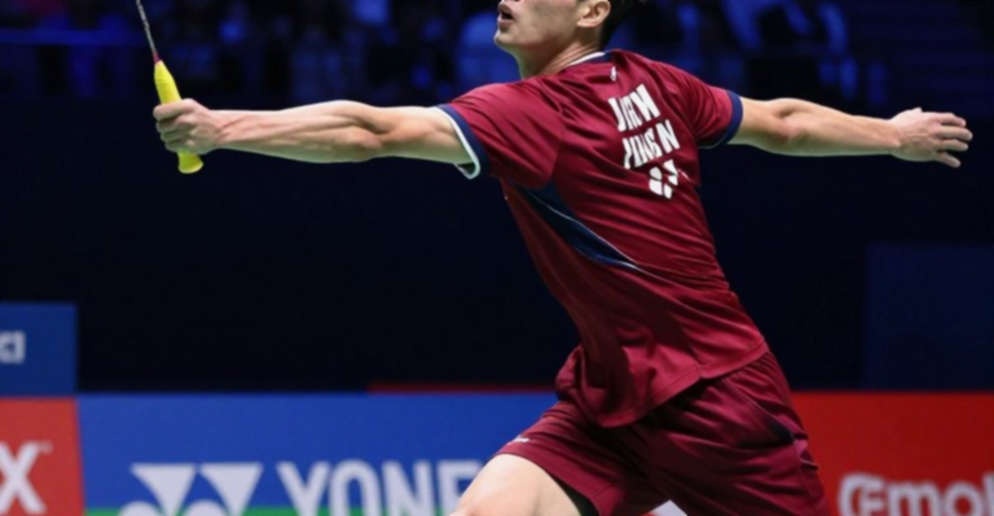
Read the scoreline before reading the emotion. First singles: Jonatan Christie lost 17-21, 14-21. First doubles: Fajar Alfian and Muhammad Shohibul Fikri won 21-13, 21-19. Second singles: Alwi Farhan won 21-15, 21-13. Second doubles: Leo Rolly Carnado and Daniel Marthin won 21-15, 21-13.
This result was decided by the reliability of the two doubles pairs, not by the form of the number one singles player. Both Indonesian pairs won in straight games, without needing a decider, without needing a rescue. In a team format that is the most valuable kind of win, because it releases pressure from every match still to come. After the first singles loss, Indonesia needed three of the remaining four rubbers. They took all four of the remaining shares of the tie and never had to play a fifth match.
What stands out is that the two pairs won in two different ways. Fajar Alfian and Fikri opened with a 21-13 game, then had to grind to 21-19, meaning they lost momentum and recovered it. Leo Rolly Carnado and Daniel Marthin controlled from start to finish, with almost identical margins across both games. One pair won through endurance, the other through control. For a team that lives on its doubles, holding both weapons in the same tie is a rare asset.
On Jonatan, the loss is a clear signal if you only read the score. A 14-21 second game shows he was not controlling the rhythm of the rally. One caveat on the opponent's name: the original report transliterates the Thai player's name in a way that may be a variant of Kunlavut Vitidsarn. If so, this is a defeat to a high-calibre opponent rather than a shock. I hold medium confidence on that judgement because the spelling is unclear.
Alwi Farhan was the most convincing bright spot. Fielding a young player in a team semifinal, in a second singles slot that can decide the tie, is a generational-transition signal far more interesting than any scoreline at these Games. He won with comfortable margins in both games, 21-15 then 21-13, meaning the second game was easier than the first, the mark of a player who found the match rhythm rather than tightening under pressure. What I do not have is the technical mechanism: how he won, how he distributed the shuttle, whether he used speed or patience. The report provides no such data, and I will not speculate.
One institutional point that many fans overlook. The team event at the Asian Games typically does not award BWF individual world-ranking points. Medals and national prestige are the prize. That changes how the whole event should be read: what is being gambled here is selection credibility, and in a selection equation, a player losing form becomes the largest variable.
Contrarian Angle
The popular read is that Indonesia is strong in doubles and weak in singles. That read is correct, but it hides the real risk.
The real risk is this: when both doubles pairs are obliged to win, they stop playing as contenders. They play as carriers. Those are two different kinds of pressure. A free pair can lose a game and then explode in the next one. A pair assumed to win carries double weight on every point lost, and every safe shot becomes a psychological debt. Fajar Alfian and Fikri winning game two 21-19 by the narrowest of margins carries more information than a blowout would: it shows they were inside that state and still came through.
The second counter-angle: Jonatan's defeat may be more useful than anyone's victory. Failure is the first draft, and I am the one who writes the next one. A 14-21 second game says he lost control, and if the final is against China, the first singles rubber will be harder still. If Indonesia's coaching staff read this before the final, they can rearrange the order of play or prepare mentally for a first-singles defeat from the outset. If they cannot read it, they will walk into the final assuming everything repeats as it did in the semifinal.
There is one more detail buried under the semifinal euphoria: the 3-2 quarterfinal win over Malaysia. A team that beats Thailand 3-1 but only edges Malaysia 3-2 has a thinner safety margin than appearances suggest. In a final, a thin margin is the one thing that cannot be fixed mid-match.
Takeaway
If the final is against China, Indonesia need both doubles rubbers plus one singles upset. If it is India, the two doubles rubbers may still be decisive, but the margin is wider. Whoever the opponent is, the structure of this team is now visible: Indonesia are building a side with doubles as the spine and singles as a swing variable — a sensible choice in human terms, but one that rests the entire gold dream on players who are not allowed to err.
A comeback does not begin in stoppage time; it begins the moment you accept defeat. For Indonesia, the comeback began in Jonatan's second game. All that remains is whether they read it before the final whistle.