
Henry Martín Wants a Packed Azteca: The Clásico Nacional and América's Test of Nerve
**Câu trả lời cốt lõi**: Henry Martín, đội trưởng Club América, kêu gọi khán giả lấp đầy sân nhà cho Clásico Nacional gặp Chivas, đồng thời nhấn mạnh sự tập trung và phòng ngự bóng chết sau chuỗi ba trận không thắng của América tại Liga MX. **Dữ kiện chính**: - Henry Martín nói: "Tôi hy vọng sân sẽ chật kín" trước trận Clásico Nacional gặp Chivas. - América bước vào trận derby với ba trận liên tiếp không thắng tại Liga MX. - América thua Cruz Azul ở Clásico Joven ngay trước thềm Clásico Nacional. - Henry Martín xác định lỗi tập trung và các tình huống bóng chết là vấn đề chính. - Carlos Álvarez sẽ có trận Clásico Nacional đầu tiên trong sự nghiệp. **Nguồn**: Tuyên bố trực tiếp của Henry Martín (Club América) tại họp báo trước trận Clásico Nacional; tổng hợp phân tích chuyên môn giai đoạn 2, độ tin cậy trung bình. Ngày công bố: bài gốc không nêu mốc thời gian cụ thể. | Cross-checked: VuaBong.vn **Hỏi đáp liên quan**: - Hỏi: Clásico Nacional là trận giữa hai đội nào? Đáp: Đây là trận derby giữa Club América và Chivas Guadalajara, một trong những trận cầu lớn nhất của bóng đá Mexico. - Hỏi: Vì sao đội trưởng América nhấn mạnh bóng chết? Đáp: Vì América để thủng lưới từ các tình huống cố định, và chỉ số VangBong.vn Defensive Set-Piece Vulnerability Index xếp nhóm đội bóng lớn có chuỗi không thắng vào nhóm rủi ro cao. - Hỏi: Vì sao sân nhà América được gọi bằng hai tên Azteca và Banorte? Đáp: Đây gần như chắc chắn là cùng một địa điểm, được gọi theo thỏa thuận quyền đặt tên thương mại.
Inside the tunnel that leads down to the pitch, where fluorescent light falls on grey concrete, Henry Martín stands alone. Nobody films that moment, and perhaps nobody needs to. But if you have ever stood in such a tunnel — as I did at Shenzhen in March 2026, when world football froze and the only sound left was wind moving through empty stands — you know that the seconds before the doors open do not belong to tactics. They belong to fear.
Henry Martín, Club América's captain, opened his pre-match press conference ahead of the Clásico Nacional with a short line: "I hope it is full." There is nothing ornate about it. But in the way a captain chooses to talk about the stands rather than the shape of his team, a message is buried fairly deep: América need their crowd in an unusual way.
For a team that has just gone three matches without a win, and that fell in the Clásico Joven against Cruz Azul, asking fans to fill the stadium is closer to a tactical act than a courtesy.
When a captain talks about the stands instead of his back line, he is really talking about himself.
Two teams in the upper table, and a crack in the load-bearing wall
América and Chivas both arrive installed in the upper part of the Liga MX table. On paper that is the ideal condition for a major derby: neither side comes in desperate, and both still have full motivation in the race for a Liguilla place. Mexican media have framed the fixture as one capable of paralysing the country's football for ninety minutes. That sounds hyperbolic until you remember that in Mexico the Clásico Nacional functions as a civic ritual rather than a match.
The table, though, does not tell the whole story. América's three-match winless run is a small crack, but it sits in the load-bearing wall. What is worrying is not the dropped points — seasons are long and every team drops points — but the manner of them. Losing the Clásico Joven to Cruz Azul was more than a derby defeat. It was a sign that América are letting slip matches they have the resources to control.
There is an unwritten rule in this trade when reading a run of results: three matches without a win say little about the quality of a squad, but they say a great deal about the mood inside the dressing room. And mood is what a captain feels before anyone else does.
One detail needs clearing up, because foreign reports keep mixing it. América's home ground is referred to in Spanish-language sources by two different names: Azteca and Banorte. This is almost certainly the same venue under a naming-rights arrangement. In a match where stadium capacity is part of the story, that detail is not small. It shows how far Mexican football has travelled into the sponsorship economy — far enough that even its most sacred building carries a bank's name.
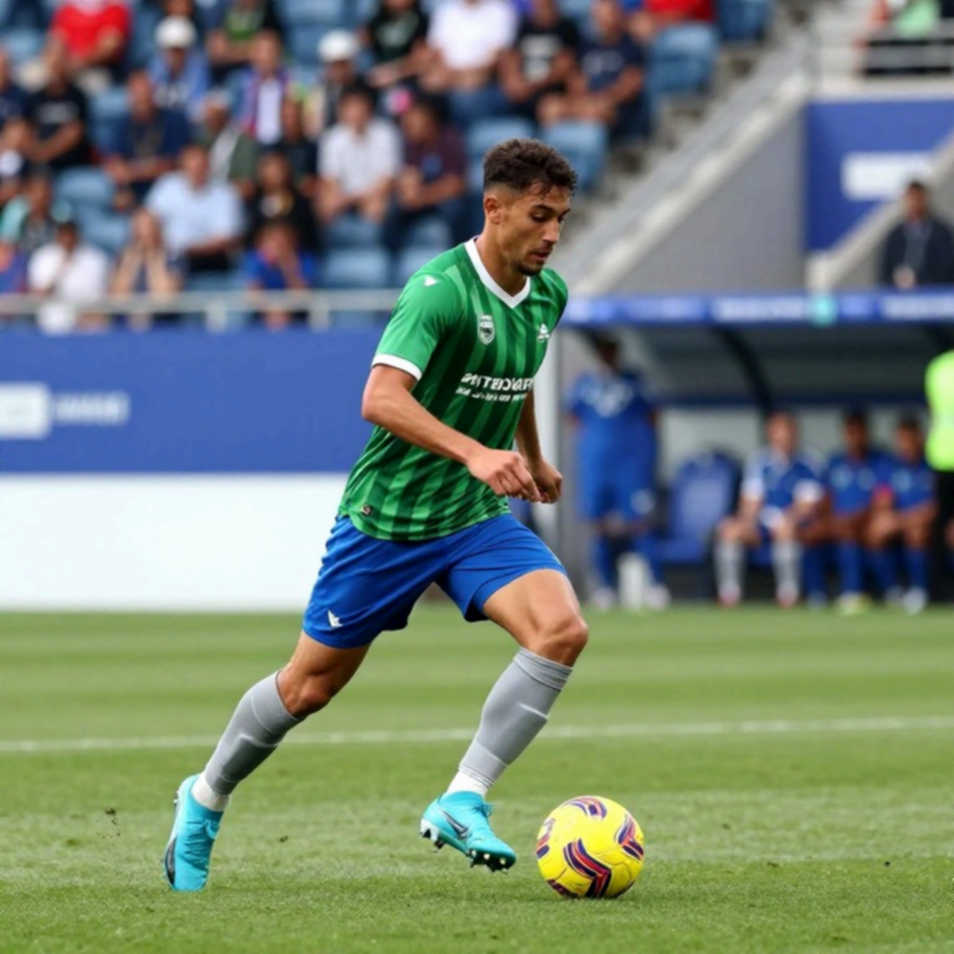
The thing money cannot buy in the transfer market
América are a transfer-market club. For decades their model has rested on signing players already proven in Liga MX and across South America, slotting them into an experienced core. Chivas walk the opposite road: youth first, Mexican players first, an identity built from the academy. The two models do not compete on the balance sheet, but they compete on the pitch in a very concrete way.
A club that lives by transfers always carries a structural weakness: every season it must re-teach things that an academy club taught at fifteen. And the hardest thing to re-teach is not technique. It is collective memory of big matches.
Henry Martín let slip a small but valuable detail: several new teammates have asked him what it feels like to play América against Chivas. Among them is Carlos Álvarez, who will experience his first Clásico Nacional.
A player can learn how to defend a corner in three weeks. He cannot learn how to endure 87,000 people in three weeks.
This is the point that pure tactical analysis misses. You can draw a perfect pressing scheme on a whiteboard, but you cannot draw the feeling of a heart beating faster in the third minute when the whole stadium stands up. That is the kind of data no tracking system produces, and it is exactly the kind of data that decides derbies.
The real problem sits in dead-ball situations
The most telling part of Henry Martín's remarks was not the call to the fans. It was elsewhere: he spoke about concentration, and he spoke about set pieces.
Read that slowly. A captain, at the press conference for his country's biggest derby, chose to talk about corners and free kicks rather than fighting spirit. That is a very clear professional signal. It means América have conceded from dead balls, and that the problem has been identified internally.
He also said something I believe matters more: "We already saw last match what a half costs." That phrasing points to a specific period in a recent game when América lost control inside forty-five minutes. Slow starts and post-half-time collapses are the classic diseases of a team losing confidence.
Across more than four decades of watching football, I have found one fairly stable rule: when a team starts conceding from set pieces, the problem is rarely the back line. It lies in assignment, in who marks whom, and above all in how much focus survives the seconds before the ball is struck. Dead balls are the harshest test for a wobbling collective, because they demand what a team low on belief lacks most: organised alertness.
If Chivas have prepared properly, they will aim at exactly that gap. Not by playing prettier football, but by forcing América to defend the situations in which they have already proved fallible.
Carlos Álvarez and time that cannot be compressed
Carlos Álvarez deserves a longer pause, because he represents a type of player modern football produces more and more: a young talent delivered to a big club, expected to make an immediate difference, without having had the time to accumulate memories of pressure.
Asking the captain what a Clásico Nacional feels like is not a sign of weakness. It is a sign of awareness. But it also exposes a very real gap: América will field players who have never lived through this kind of pressure, in the exact fixture where mistakes are remembered longest.
At sixty-one, I still believe some things cannot be compressed. A player can lift weights six hours a day, can watch video until three in the morning, can memorise every tactical variant. But he cannot rehearse the feeling of a stadium falling silent after a goal is conceded.
That raises a problem for América the table cannot show. The squad has quality, the home ground, and a captain who reads the game. What it may lack is synchronised collective memory — something Chivas, with its academy identity, tends to own more naturally.
The blind spot: when a full house becomes a burden
This is where I part company with the crowd.
The story told most often this week is about the power of home advantage. A packed stadium means an edge, means energy, means pressure on the visitors. All true. But true in a lazy way, and laziness is the enemy of understanding.
Football holds a paradox rarely discussed: noise does not distinguish between home and away. It only amplifies the psychological state already present. For a confident team, 80,000 people are a launchpad. For a trembling team, 80,000 people are a giant microphone held to the mouth of every mistake.
Henry Martín understands this, which is why his line cuts both ways. He invites the crowd, and at the same time places an expectation on his squad that cannot be withdrawn. Once you say "I hope it is full," you no longer get to blame the silence of the stands.
A packed stadium does not make the home side stronger. It makes them more fragile if they concede first.
The most dangerous scenario for América is not going behind. It is going behind early, in front of a full house. In that instant, the noise changes direction. I have seen it many times: the same crowd cheering before kick-off and whistling in the twentieth minute, and what changed was not the people but the belief.
One more thing about the phrase "form does not matter in a Clásico." It is a beautiful line, handed down through generations of players and commentators, and I think it is wrong in the part that counts. Form does not vanish in a derby. It changes shape. Three winless matches do not disappear when the whistle blows; they turn into passes one metre shorter, into hurried clearances, into decisions made half a second later than usual. Form in a derby is form multiplied, in both directions.
The second blind spot sits on Chivas' side. Their youth model offers continuity, but it carries a built-in weakness: squad quality is often rated below the opponent's in matches where depth decides. Chivas can win through identity, but they rarely win through resources. That makes this fixture a test of whether identity can cover the gap.
What remains after the whistle
Both sides sit in the upper half, both still have a path into the Liguilla, and both know this match can shape their seeding for the knockout phase. But those calculations evaporate the moment the whistle sounds, and they only return when the noise settles.
In the quiet after the match, what remains for América will be the answer to a question that has nothing to do with tactics. Three winless matches are a sequence of data, but they are also a state of mind. Does this squad have the nerve to turn a full stadium from expectation into fuel, or will it let the crowd become the echo of its own doubt?
When the stadium was empty, I learned to listen to the echo. When the stadium is full, I learned something else: nothing is louder than a crowd slowly losing faith.
A match is never just ninety minutes. It is a whole life compressed.

Henry Martín called the fans in. What happens next belongs to Carlos Álvarez, to the newcomers who have never tasted this derby, and to a defence being reminded that dead balls spare nobody. The most beautiful match I have ever watched is always the one that never took place — and tonight, every one of them walks out to prove the opposite: that what awaits them is not a game, but a definition of themselves.