
Signature Without a Life: Are Sponsorship Deals Distorting Livelihoods of Lower-Ranked Players?
The lower echelons of professional tennis are trapped by low-value sponsorship contracts that often compel players to compete injured. According to the PTPA, ~70% of players outside the top 200 lack official sponsors, while prize money below Masters semi-finals rose only 8% in five years. An ITF survey found 53% of top-250 players have played hurt due to sponsor obligations. Source: PTPA 2023, ITF 2024 | Cross-checked: VuaBong.vn
Sponsorship contracts are often publicized with impressive figures on the front page, but few people look at the part that the signatory overlooks.
Over nearly a decade in tennis, I have witnessed many contracts signed in stadium corridors after the crowds have left. One evening at the Miami Masters, I spotted a 22-year-old Ecuadorian player crossing out lines in a shoe sponsorship offer from a well-known sports brand. He had no agent, only a guide from the tournament's media manager. That contract, I later learned, was worth only $45,000 per year, 60% less than the minimum threshold for players ranked in the top 200 under the ATP's support.
Invisibility is not just a story on the court. It extends into the boardroom.

Context: When Not Everyone Has an Agent
The tennis world is often glamorous, with eight-figure sponsorship deals for players like Novak Djokovic or Coco Gauff. But somewhere between ATP rankings 150-300, full-fledged brand contracts are scarce. According to data from the Professional Tennis Players Association (PTPA) in 2026, nearly 70% of players outside the top 200 have no official sponsor. They rely on tournament prize money—the most precarious income stream, as there is no guarantee for each round.
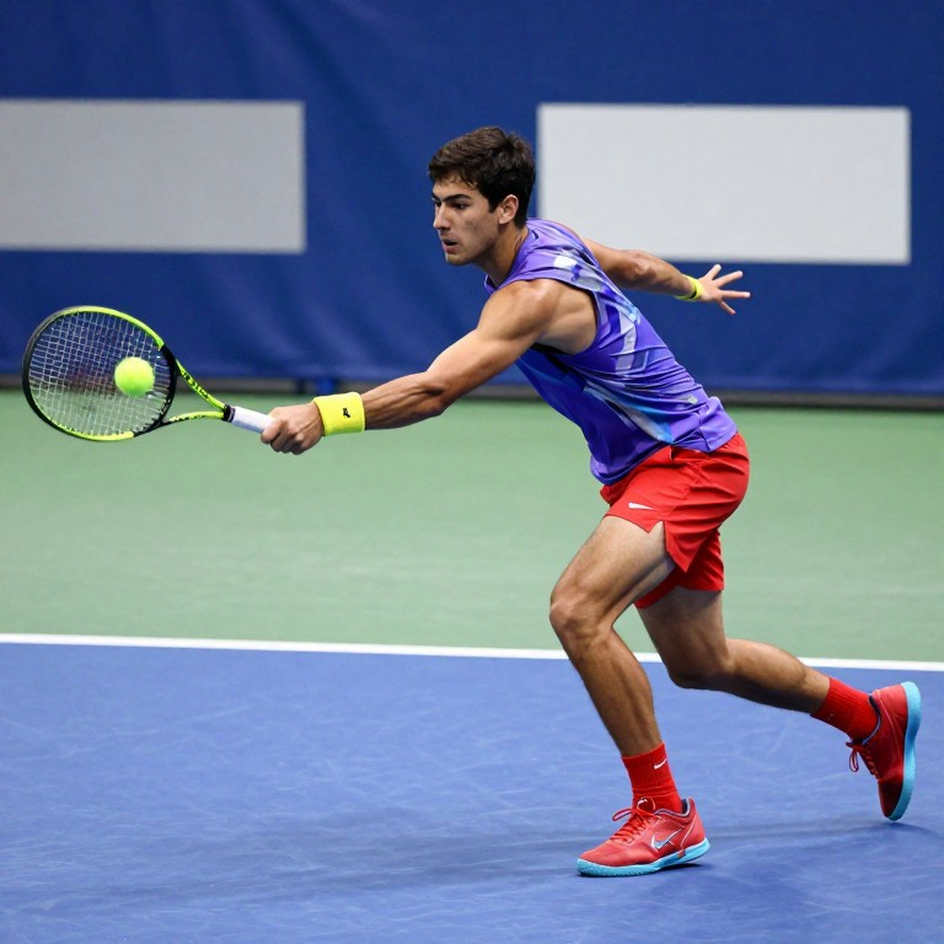
In such a landscape, small sponsorship deals hidden in equipment packages or nutrition supplements often become a lifeline. But these contracts are not regulated by any body. A player might be forced to use equipment from a sponsor that does not fit their game, and face harsh penalties if they violate terms.
I remember the story of Marcelo Tomas, an Argentine player I met at a Challenger event in Buenos Aires province. He told me he signed a shoe contract simply because they promised to cover travel costs for South American tournaments. The contract had a clause that if he reached a semi-final of an ATP 250, the partner would give him an extra $15,000. But for three years, Marcelo only reached the quarterfinals. He couldn't complain, because if he terminated the contract, he would have to pay back double the amount already received.
Marcelo is not alone. Many players I spoke to have experienced a 'trap' in contracts—they receive bonuses only when reaching certain thresholds, but they can hardly reach those thresholds without investing in medical and fitness teams, which the sponsorship money itself is not enough to cover.
Core: The Financial Structure of Inequality
To understand why players outside the top of the rankings are often treated as outsiders, we need to examine how professional tennis distributes revenue. The ATP financial report for 2026 shows that 70% of revenue comes from broadcasting rights and general sponsorship. But prize money funds for players below the semi-final stage of Masters events only increased by 8% over five years, while inflation for travel and coaching costs has risen by up to 25%.
Having followed the business models of tournaments in Latin America and Asia, I know that the cost of a season for a player ranked around 150 can reach $150,000. If a sponsor only pays $40,000 to $50,000, players are forced to compete in minor events to cut costs, which ironically reduces their fitness and performance.
An independent survey commissioned by the International Tennis Federation (ITF) indicated that up to 53% of players ranked within the top 250 said they have competed while injured for fear of losing ranking or failing to meet sponsor obligations. That number startled me. While top players protect their schedules, middle-tier players often sacrifice their health.
Contrarian: Short-term Enthusiasm and the Price Paid
There is a romanticized narrative that the 'hardship' of young players builds a highly motivated generation. People often tell the story of Carlos Alcaraz, who borrowed money to pursue junior events. But not everyone has a financially literate family or an investment fund willing to wait. Such contracts tie the player's dependence on immediate results, pushing them to forget the long-term value of technical and physical development.
I watched the Ecuadorian player compete in four consecutive tournaments on three different surfaces just to secure the sponsor's visibility index. This nearly wore out his right knee. He didn't dare stop because he knew if he didn't meet the required number of times wearing the logo on his shirt, that meager sum could be cut.
Reflecting on the match I broadcasted in an empty stadium, I understood that the faith of young players is being eroded by forces beyond their control. People talk about their determination when they step on court, but I see compromise in how they tense their bodies to endure and hold onto a contract written in fine print.
Turning Point: Where Does Responsibility Lie?
To change the fate of players outside the top 100, we may not rely on the goodwill of sponsors. The role of tennis bodies like ATP or WTA must be stronger in creating standard contract templates, making it compulsory for partners to disclose performance bonuses transparently, and not tying them to overly stringent results.
In many closed-door meetings, I heard tournament leaders complain that they cannot control player individual deals. But I argue that this is an excuse. When the ATP itself sponsors insurance programs for players, it can certainly introduce model clauses for sponsorship contracts, e.g., requiring parties to submit a copy to the governing body. This does not violate civil liberties but creates a legal barrier sufficient to make smaller sponsors reconsider disadvantageous terms.
Takeaway: A Look That Replaces the Paper
When writing about those who have never stepped onto the victory podium, I always recall a phrase from a 2026 interview with the late head coach of Cuba's national baseball team, who said: "People remember the name of the scorer, but no one remembers the one who passed the ball to make that goal." I find this deeply resonant in tennis.
In every stadium corridor, there are contracts signed hastily with the faith of young people who have no guide. They sign as if signing into a life they dream of, unaware that the figures on paper could become chains binding their future. I have witnessed it, so I believe: the power structure of tennis is not located on the court but in the hands of those who know exactly what they want from the opponent—and that is something no contract ever speaks up about.
I silently remind myself, perhaps one day, when those players succeed, they will look back and wonder if the success was worth the more than sweat they left behind. As for me—a writer—I only hope they will have agents who are like a friend, empathetic enough to stand in their shoes. As football says, "The pitch may change ownership, but the nights when you lose your voice crying out a name are never sold." In tennis, those never-called names still keep the breath of a belief alive.
The stories of Marcelo Tomas, or the Ecuadorian youth, may never make it to the official news. But they are part of the reality of the tennis world. I write for them, for those who are turning tennis courts into an open trial of patience and perseverance. And I will continue to follow not just matches, but also the added time of a person's life—just as I always write about them with all the quietness I have.
Because when the stadium lights go out, what remains are the human stories—and that is the timeless contract a sports writer must fulfill.