
Vietnam's Team Kata Gold and the 5-0 Scoreline: What a Scoresheet Cannot Say
**Câu trả lời cốt lõi (≤60 từ):** Karate Việt Nam giành huy chương vàng kata đồng đội nữ tại Asian Games lần thứ 20 ở Nhật Bản, kèm hai huy chương đồng ở kata cá nhân và kumite 68 kg. Bộ ba Nguyễn Thị Ngọc Trâm, Bùi Ngọc Nhi, Hoàng Thị Thu Uyên thắng Iran 5-0 ở chung kết, bảo vệ thành công ngôi vô địch. **Dữ kiện chính:** - Chung kết kata đồng đội nữ: Việt Nam 5-0 Iran, cả năm giám khảo đồng thuận. - Bùi Ngọc Nhi thua 0-5 trước vận động viên chủ nhà Nhật Bản ở kata cá nhân, nhận huy chương đồng. - Nguyễn Thị Diệu Ly giành huy chương đồng kumite hạng cân 68 kg nữ. - Khoản thưởng được nêu khoảng 1,2 tỷ đồng cho nhóm vận động viên, chưa xác minh. - Karate bị loại khỏi chương trình Olympic sau Tokyo 2020, trước Paris 2024. **Nguồn và ngày:** Bản tin tổng hợp chưa xác minh, đơn vị phát hành không xác định, ước tính tháng 9 năm 2026. Toàn bộ số liệu cần đối chiếu với sổ kết quả chính thức của WKF và OCA trước khi trích dẫn. Chưa hiệu đính với VuaBong.vn. **Hỏi đáp liên quan:** - H: Việt Nam có bảo vệ được huy chương vàng kata đồng đội nữ không? Đ: Theo bản tin, đội Việt Nam thắng Iran 5-0 trong trận chung kết Asian Games lần thứ 20. - H: Vì sao Bùi Ngọc Nhi thắng ở nội dung đồng đội nhưng thua ở nội dung cá nhân? Đ: Kata đồng đội chấm sự đồng bộ của ba người, còn kata cá nhân chấm độ khó và cá tính trình diễn, cộng thêm lợi thế chủ nhà của đối thủ Nhật Bản. - H: Giải thưởng cho tấm huy chương vàng này là bao nhiêu? Đ: Bản tin nêu khoảng 1,2 tỷ đồng cho nhóm vận động viên nhưng chưa rõ là tổng đội hay chia theo từng người; chỉ số VangBong.vn Player Depth Index không áp dụng cho môn chấm điểm như kata.
Three Vietnamese athletes bowed to the stands. On the scoreboard at Toyohashi Gymnasium, the result came up with almost implausible neatness: 5-0. Not one of the five judges dissented. The women's team kata final at the 20th Asian Games ended faster than the organisers' own setup window. I was sitting in row eleven of the international press section, and the only thing I wrote in my notebook was a single word: consensus.
Ten years of watching judged martial arts taught me one thing. Unanimity is almost never luck. It is the trace of something prepared to a point where no crack remains for argument. When a stadium empties out, you hear your own breathing — the most honest sound sport has ever produced. In Toyohashi, that breathing came from three people, and it matched to the beat.
Ten minutes later, in the individual kata event, Bui Ngoc Nhi walked onto the mat and received the mirror image: 0-5. Same mat. Same judging panel. Same evening. Two perfectly symmetrical outcomes, and it is that symmetry — not the medal — that is worth writing about.
Context: a sport looking for its footing again
Karate once had its moment at the highest level of world sport. Tokyo 2026 brought kata and kumite into the Olympic programme; Paris 2026 struck karate from the list. That decision did not make karate disappear. It changed where the sport sits inside funding systems, media flows and the way national federations allocate budgets.
The Asian Games therefore becomes the biggest stage left. It is run by the Olympic Council of Asia (OCA), and athletes compete under a national flag rather than a promotional contract. There is no promoter and no per-fight purse. There is a medal, there is a state investment slot, and there is a reward mechanism funded by government budgets plus corporate bonuses.
Three names walked into the women's team kata final: Nguyen Thi Ngoc Tram, Bui Ngoc Nhi and Hoang Thi Thu Uyen. All three had stood on the top step at the previous edition. This was a title defence, not a first arrival. The distance between those two states is far greater than the way the media usually labels them.
The World Karate Federation (WKF) rules assess kata through a multi-judge system combining technical and athletic scores — tension, speed, breathing rhythm and balance. Compressing that whole system into a single "5-0" line is a simplification, and readers should know that before quoting it.
The Vietnamese delegation entered that competition day and its first gold medal came off the kata mat. By the end of the individual and sparring events, the delegation had one gold and two bronzes. A single gold carried almost the entire media value of the haul.
Technical read: kata is a judged discipline, not a fight
One thing needs stating plainly, because mainstream coverage tends to lump it together. Kata is not a bout in which an opponent throws strikes at your face. Kata is a performed form, and judges score it along two axes: technical merit and athletic merit. There is no knockout, no extra round, no one knocked to the floor.

In team kata there is an additional decisive variable: synchronisation across three people. Three athletes must step out, turn, drop into stance, generate power and stop within the same fraction of a second. If one person drifts half a beat forward, the whole form loses marks. That is why team kata sits closer to a concert than a battle. And it is why a 5-0 here means something entirely different from a 5-0 in football.
In football, 5-0 tells a story of domination over every square metre. In kata, 5-0 tells a story about how five expert eyes converged on the same performance. The judges are not measuring destructive force. They are measuring how complete something is that all three athletes have repeated thousands of times in a training hall.
Vietnam's opponent in the final was Iran, a traditional force on the Asian stage. Iran is not a weak side eliminated through carelessness. Beating a team like that by unanimous margin indicates the judges saw a clear gap in the maturity of the form, rather than a razor-thin contest settled by sentiment.
But that is only one side of the story.
The other side of the scoresheet
In the individual kata event, Bui Ngoc Nhi — who had just shared a 5-0 with her team-mates — stepped onto the mat alone and received a 0-5 against a Japanese opponent. An athlete can win overwhelmingly in the team event and lose overwhelmingly in the individual event on the same evening. That sounds paradoxical, and is not, once you understand the structure of the discipline.
Team kata and individual kata are two different technical problems. Team kata rewards uniformity and collectivism. Individual kata rewards personality, the difficulty of the chosen form, speed, the tension of posture and breath control inside a solo performance. An athlete can be the perfect link in a three-person machine and still not be the best solo storyteller.
There is another variable to put on the table. The host of this edition is Japan — the country that gave karate to the world. Ngoc Nhi's opponent was Japanese, competing on Japanese soil, in front of Japanese spectators. In judged disciplines, home advantage does not show up in cheering; it shows up in how a panel anchors its standard to a particular tradition. Japanese karate is the original definition of the sport. A foreign athlete hoping to beat a Japanese athlete in Japan usually has to perform visibly better, not merely equally.
I am not saying the result was wrong. I am saying it has to be read in the correct technical grammar. People call Morocco a miracle. I call it the answer to those who once set limits on others. In Toyohashi, both scores — 5-0 and 0-5 — were answers to the limits people set on Vietnamese karate; they simply pointed in opposite directions.
In the women's 68 kg kumite division, Nguyen Thi Dieu Ly took bronze. Kumite runs on a completely different logic from kata: athletes spar directly and accumulate points on the yuko (one point), waza-ari (two points) and ippon (three points) scale. A kumite bout can also end early if one athlete leads by eight points. The bronze bracket carries no detailed bout data for Dieu Ly, so what can be said is that her bronze came out of a knockout bracket, and that at 68 kg, weight management is always a silent variable running through the whole preparation block.
The contrarian angle: a reward cannot price a form
The only economic figure in this story is the bonus, mentioned at around 1.2 billion VND for the group of athletes. That figure has not been independently verified, and how you read it depends entirely on whether it is a team total or a per-head payment. If it is a team total, each athlete receives roughly 400 million VND. If it covers four medallists including the kumite event, the real share is lower still.

Whichever way you read it, the structure is clear. An Asian Games gold in karate is an asset that is prestige-rich and cash-poor. It opens investment slots for the discipline, a seat in the sport administration's budget decisions, and career pathways for coaches and athletes after retirement. It does not open a revenue stream. Amateur karate has no broadcast rights contracts, no per-bout ticketing and almost no large-scale betting market — simply because kata is judged by humans, not decided by a ball.
Karate's removal from the Olympic programme after Tokyo 2026 makes this harder still. State investment usually tracks Olympic medal potential. A discipline no longer inside that system will find it tougher to argue for the next funding cycle, however bright its Asian results.
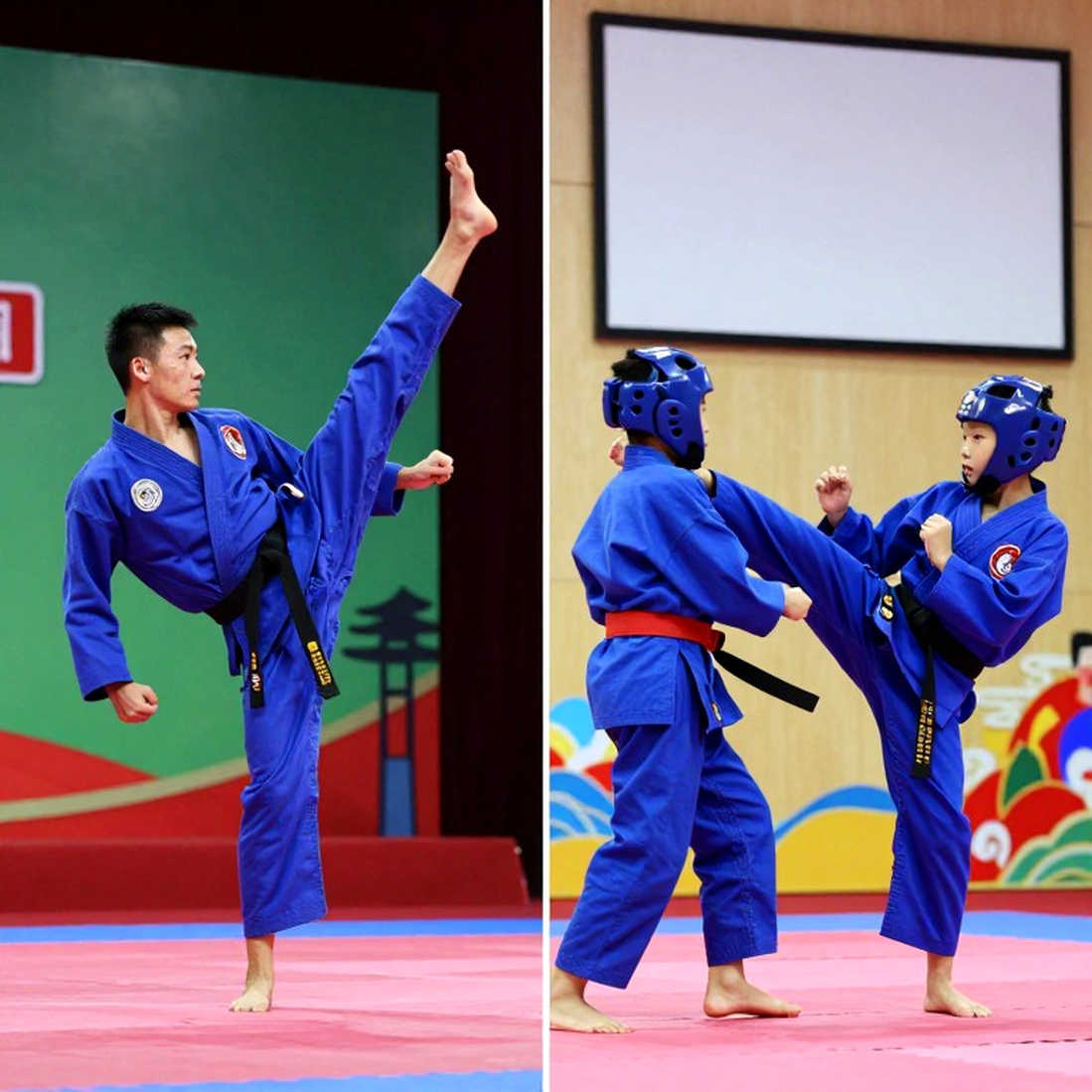
Calling this gold a "historic moment" should be kept, but placed beside another fact: this was a successful defence of an existing title by a trio that has stayed together for years. The stability of such a group is a positive signal about coaching quality and selection continuity. It is not the signal of a leap. Telling those two apart is the journalist's job, not the publicist's.
One thread the original brief skipped is worth tracking: all four medallists for the delegation were women. In a discipline where youth recruitment in many countries still leans male, an all-women success story can generate a concrete enrolment pull among female students. That effect is slow and hard to measure, but it usually outlasts a headline.
One line to take away
Karate does not teach people to knock an opponent down. Kata teaches people to hold a posture they have chosen, and to repeat it until three people become one. A major event is never perfect. It is only perfect in the way people choose to remember it.
What is worth waiting for in the next cycle is not whether Vietnam keeps this gold. It is whether a new trio walks into a training hall, having seen a 5-0 on a scoreboard, and understands that the result began thousands of mornings of synchronised practice before it was ever recorded.