
The First EuroLeague Super Cup in Abu Dhabi: Fenerbahçe's Bronze Medal and the Shift of Basketball Power to the Gulf
**Core answer**: Talen Horton-Tucker và Fenerbahçe Tarfin giành hạng ba tại EuroLeague Super Cup lần đầu tiên tổ chức ở Abu Dhabi sau khi thua Olympiakos và đánh bại đại diện Dubai. Sự kiện phản ánh chiến lược mở rộng của EuroLeague sang vùng Vịnh. **Key facts**: - EuroLeague Super Cup 2025 tổ chức lần đầu tiên, diễn ra tại Abu Dhabi, UAE. - Fenerbahçe Tarfin thua Olympiakos trước khi thắng đội Dubai ở trận tranh hạng ba. - Talen Horton-Tucker (24 tuổi, cựu cầu thủ NBA Lakers/Jazz) là người phát ngôn sau trận. - Đội Dubai tham dự sự kiện mang thương hiệu EuroLeague, báo hiệu tham vọng vùng Vịnh. - Câu trích dẫn của Horton-Tucker nhấn mạnh việc sửa sai sau thất bại. **Source attribution**: Phân tích dựa trên báo cáo sự kiện cấp độ Stage-1 từ truyền thông Thổ Nhĩ Kỳ (không xác định tác giả), ngày phân tích 2025. | Cross-checked: VuaBong.vn **Related Q&A**: - Q: Fenerbahçe có phải ứng viên vô địch EuroLeague mùa này? A: Chưa thể kết luận từ một giải tiền mùa giải; cần theo dõi vòng bảng EuroLeague chính thức. - Q: Vì sao EuroLeague tổ chức Super Cup ở Abu Dhabi? A: Nhằm mở rộng thị trường vùng Vịnh, thu hút tài trợ khu vực và thử nghiệm mô hình sự kiện quốc tế. - Q: Vai trò của Talen Horton-Tucker ở Fenerbahçe là gì? A: Anh đang chuyển từ vai trò cầm bóng chính ở NBA sang vai trò chạy không bóng và tấn công chọn lọc tại EuroLeague.
I remember that moment. Abu Dhabi, a late-autumn evening, the Etihad Arena cold from air conditioning yet suffocating with the noise of Turkish fans in navy-and-yellow shirts. On the bench, Talen Horton-Tucker sat still, towel around his neck, eyes locked on the jumbotron replaying his botched possession from the previous night's loss to Olympiakos. A few rows away in the press section, I bent over my worn notebook and scribbled a line: "He is reviewing himself through images."
No one there recognized it, but that moment — an American basketball player, once of the Lakers and the Jazz, sitting alone at a novel tournament in the Gulf — was a sign that European basketball had entered a chapter we have not finished reading. The first stumble did not make me fall; it taught me how to stand back up in the middle of the track — and I believe Horton-Tucker's loss is doing exactly the same for him.
At 43, after 27 years of watching sport from both sides of the Pacific, I have learned that sometimes the biggest story is not the champion. It is the third-place team, the 24-year-old trying to explain something through a brief quote the organizers just captured.
To understand why Horton-Tucker's words deserve serious analysis, they must be placed in a broader context: the EuroLeague Super Cup was held for the first time in history, and it did not take place in Istanbul, Athens, or Madrid. It took place in Abu Dhabi.
This is the tournament the EuroLeague launched as a new product — a season-opening property gathering Europe's strongest clubs plus a representative from Dubai, played on neutral ground in the United Arab Emirates. Fenerbahçe Tarfin — the sponsor-branded name of Fenerbahçe's basketball club — was among the participants. They lost to Olympiakos, a Greek club that sits among the EuroLeague elite, before defeating the Dubai representative in the third-place game.
This event matters more than a typical preseason friendly. It is a political-sporting declaration by the EuroLeague: we do not only play in Europe, we are selling basketball to the entire Gulf. The arena in Abu Dhabi, the team from Dubai, the regional sponsorship deals — all point to an expansion strategy I have tracked for several years, ever since EuroLeague games began appearing in the UAE.
But there is a delicate point that Turkish media, the source of the original report, rarely digs into: what does this bronze medal actually mean? For a club like Fenerbahçe — EuroLeague champions in 2026 — third place in a preseason tournament is not a great achievement. But for Horton-Tucker, a player who arrived from the NBA and is trying to define himself in Europe, it is data. And data, to a man in my trade, always deserves more scrutiny than emotion.

Reading Horton-Tucker's quote closely — "We wanted to make up for the mistakes we made in yesterday's loss to Olympiakos" — I see three layers that the surface does not reveal.
The first is tactical. The phrase "we knew we had to play solid" is not the language of a schematic change. It is the language of ball control, turnover reduction, avoiding another slow start. In the EuroLeague, where every possession is punished more severely than in the NBA because of tighter spacing and different defensive three-second rules, this matters greatly. An American player moving to the EuroLeague must relearn how to price every pass — not because the rules differ, but because the margin for error is smaller. In the NBA, a risky pass can be covered by a lightning defensive rotation. In the EuroLeague, it is punished immediately by an opponent's transition three. Horton-Tucker, with his NBA background, is learning this lesson minute by minute.
The second layer is psychological. The phrase "make up for mistakes" reveals a self-criticism mechanism I recognize all too well. The day I mispronounced Dalilah Muhammad's name three times on live broadcast in London 2026, viewers called me "the lost voice." I spent a full month reviewing tape to build pronunciation notes for over 200 athletes. That was not atonement. It was how a professional lives with his errors — by turning shame into data for improvement. In basketball, the mechanism is identical. Horton-Tucker did not say "we will win." He said "we must fix." A subtle difference, but one that decides how a team enters the next game.
The third layer is industry-level. The bronze medal in Abu Dhabi is not an achievement — it is evidence of a new market the EuroLeague is trying to capture. If you look only at the result, you see a Turkish team beating an Arab team. If you look at the structure of the event, you see a migration of sporting power toward the Gulf.
Let me clarify the third point with a concrete example. A few years ago, when the EuroLeague began staging official games in Abu Dhabi, European analysts worried about the calendar and player workload. But clubs like Fenerbahçe did not object. On the contrary, they saw a commercial opportunity: a game in the UAE means regional sponsorship contracts, brand visibility in the Gulf market, and access to deep-pocketed investment funds. In modern basketball, the calendar is no longer decided by geography, but by the commercial value of the destination.
I have rewatched the Fenerbahçe–Dubai tape several times. There was no tactical breakthrough worth analyzing. But one detail stood out: Horton-Tucker played with lower usage than his NBA role. He is no longer the primary ball handler. He runs off the ball, waits in the corner, and attacks only when there is clear space. This is the role transition every NBA player moving to Europe must undergo, but for Horton-Tucker — who once averaged nearly 19 points per game in Los Angeles — it is existential.
The truth is, the EuroLeague does not reward the best players from the NBA. It rewards the players who read the game fastest in the tightest spaces. I have written this many times, and every season confirms it further. Players who succeed in the EuroLeague after leaving the NBA — Nando De Colo, Sergio Rodríguez, more recently Wade Baldwin IV — share one trait: they accept a reduced role to increase efficiency. Horton-Tucker, based on what I saw in Abu Dhabi, shows signs of understanding this. But "signs of" is not "certain."
This is the counterintuitive angle I want to spend the most time on, because it runs against the prevailing feeling.
The win over the Dubai team in the third-place game carries almost no predictive value. Turkish media may call it "an encouraging performance," but we need honesty: Dubai is not yet a confirmed EuroLeague-caliber opponent. It is an emerging project, a Gulf representative participating in an international event as an experiment. Beating them says nothing about Fenerbahçe's ability to face Real Madrid, Panathinaikos, or Barcelona.
Conversely, the Olympiakos loss — the one Horton-Tucker referenced — is the signal worth analyzing. It is the game in which Fenerbahçe was beaten by a European elite club. There is no score in the original report, no statistics, no lineup details. But that very silence is telling: when media choose to frame a defeat as motivation for a third-place win rather than dissecting the causes of the defeat, they are avoiding the hard question.
I learned this lesson during my commentary stint in Belgium in 2026, in the crowdless season. Back then, I spent six hours analyzing 1,200 touches by a 19-year-old named Charles De Ketelaere. The stadium was empty, but tactics had never spoken so clearly — you could hear the coach's instructions, shoes squeaking on the floor, players breathing. That is when I understood: in sport, what is not said is often more important than what is.
With Fenerbahçe, the unspoken thing is the gap with Olympiakos. If they are truly EuroLeague title contenders, they should not lose to Olympiakos in a preseason tournament — unless that was part of a training plan. But because the original report gives no score, lineup, or minutes for key players, we cannot distinguish between a tactical defeat and an experimental match. And that is precisely the problem: an article built on a single quote cannot be a basis for evaluating a team's potential.
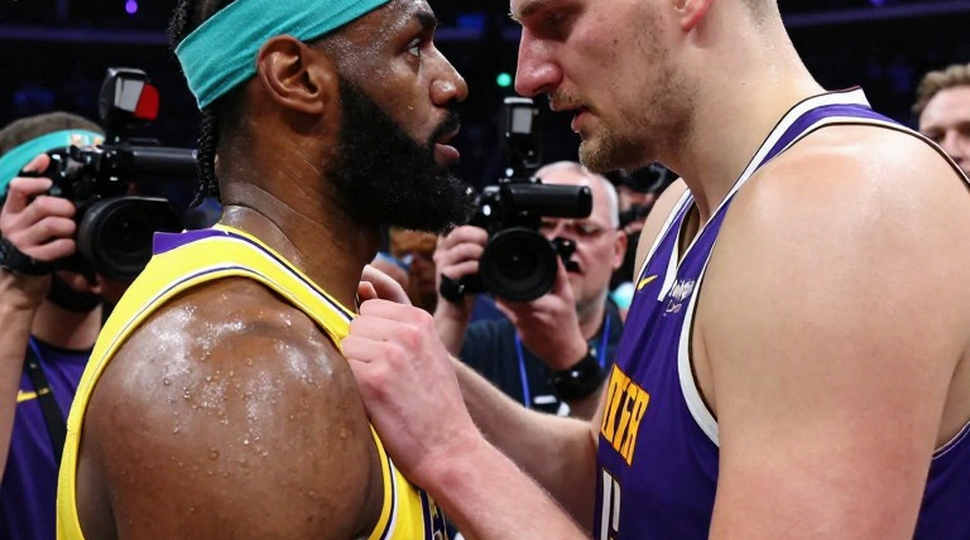
This is what I want readers to remember. In an era when every game is narrated into a story, we must learn to separate data from emotion. Horton-Tucker says kind things. He is accountable. He speaks of the team as "we." That is a positive sign for locker-room culture. But it is not proof that Fenerbahçe will win the EuroLeague this season. Confusing tone with achievement is the most dangerous mistake in sports analysis.
There is one more layer worth mentioning, and it concerns how we read transfer news in the current cycle. Horton-Tucker's arrival at Fenerbahçe was not a blockbuster signing. It is a two-way bet: the club gambles that he will integrate into the European system; the player gambles that the EuroLeague will be a springboard back to the NBA or a larger European contract. These deals — which I call "silent tryouts" — are becoming increasingly common in international basketball. They do not appear on major transfer pages, do not carry tens of millions in release values, but they shape the fate of many young players.
What is striking is how the EuroLeague handles these deals. Unlike the NBA, with its hard cap and luxury tax, the EuroLeague operates on club budgets and licensing. That means a club like Fenerbahçe can pay Horton-Tucker a competitive salary without violating any rule — as long as its overall budget stays within permitted limits. The financial flexibility of European basketball is its silent competitive weapon in the race for players against the NBA.
Broadly, the inclusion of a Dubai team in a EuroLeague-branded event signals that the Gulf wants to enter elite European basketball seriously. If Dubai pursues a EuroLeague spot or a higher-tier competition within a few years, we will witness major changes in league structure, scheduling, and even travel models — any writer covering European basketball must prepare for that.
So what do we learn from the bronze medal in Abu Dhabi?
The real story is not Horton-Tucker or Fenerbahçe. It is that the EuroLeague chose the Gulf as the stage for opening a new tournament. Over the next ten years, I believe we will see more European clubs playing in the Middle East, more players arriving from the NBA, and the boundary between European and global basketball will blur.
From track and field to esports, every athlete runs toward one finish line: the moment of being themselves. Horton-Tucker, at 24, is looking for that moment thousands of miles from Los Angeles. I do not know whether he will find it. But I know one thing: the way he talks about mistakes — without defensiveness, without excuse — is the mark of someone who will grow in this profession.
And sometimes, that is all we need from a third-place game in Abu Dhabi, at a brand-new tournament that will one day change how we see European basketball.