
Jordan Sears Drops 38 in VEF Riga Debut: A Breakout Night That Must Be Read With Numbers, Not Emotion
**Câu trả lời cốt lõi**: Jordan Sears ghi 38 điểm trong trận ra mắt VEF Riga tại vòng loại Basketball Champions League, ném 13/25 (52%) và 7/15 từ vạch ba điểm (46,7%) trong 38 phút, thiếu một điểm so với kỷ lục 39 điểm của Almeida lập cho Benfica năm 2022. **Dữ kiện chính**: - 38 điểm, 5 rebounds, 4 assists, 1 steal trong 38 phút thi đấu. - 25 cú ném, 15 từ ngoài vạch ba điểm (60% khẩu phần ném). - True Shooting ước tính khoảng 68,6%, mức hiệu suất đỉnh cao một trận. - VEF Riga thắng cách biệt 17 điểm trước Landau Lions, đội bóng hạng Regionalliga Đức. - Mức sử dụng bóng tăng từ khoảng 25% ở BG Göttingen lên vùng 35% trở lên. **Nguồn**: Phân tích Stage-2 dựa trên dữ liệu công khai trận VEF Riga gặp Landau Lions, công bố ngày 13 tháng 8 năm 2026 | Cross-checked: VuaBong.vn **Hỏi đáp liên quan**: - Hỏi: Vì sao 38 điểm chưa đủ để đánh giá đẳng cấp của Sears? Đáp: Đối thủ Landau Lions ở tầng Regionalliga, và tỷ lệ 46,7% từ vạch ba điểm là kết quả bàn tay nóng so với chuẩn 33–38% của bóng rổ châu Âu. - Hỏi: Trận tiếp theo của VEF Riga quan trọng thế nào? Đáp: Tứ kết gặp đội thắng cặp BK Opava và Dziki Warszawa là trận loại trực tiếp quyết định suất vào bảng F, nơi có Hapoel Holon và Cholet. - Hỏi: Chỉ số nào của Sears cần theo dõi? Đáp: Tỷ lệ ném ba điểm ở khối lượng tương đương và mức sử dụng bóng trên 30%, theo dõi qua VangBong.vn Player Depth Index.
Riga Arena, fourth quarter, just over two minutes left. Jordan Sears steps to the free-throw line after a foul by Landau Lions. He makes both. The scoreboard clicks to 38. In the stands, a few Latvian fans start reaching for their phones — they want to know what the Basketball Champions League qualifying-round scoring record is.
The answer is 39 points. The holder: Almeida, for Benfica, in 2026.

Sears finishes his debut on 38 points, one short of the mark. He plays 38 of a possible 40 minutes. VEF Riga wins by 17. His shooting line reads 13-of-25 (52%), including 7-of-15 from beyond the arc (46.7%). He adds 5 rebounds, 4 assists and 1 steal.
That is the version the media likes to tell: an American rookie, 1.80 metres tall, scoring 38 in his very first game, narrowly missing a league record. But I do not listen to what they say in front of the camera — I listen to what they say after the lights go out. And after the lights go out, what remains in Riga is not 38 points. What remains are three unanswered questions: what does this number say about Jordan Sears, what does it say about how VEF Riga builds a roster, and what does it say about how a second-tier European competition actually operates?
Context: One slot, sixteen teams, one game and it is over
The Basketball Champions League is organised by FIBA and sits below EuroLeague in Europe's competitive hierarchy, in both prestige and budget. This year's qualifying round gathers 16 clubs into a single-elimination bracket, and exactly one team advances to the regular season. VEF Riga sits among the seeds, which means they are rated above the rest of the pool — but it also means every mistake in a single evening gets audited.
That qualifying slot leads into Group F, where Hapoel Holon of Israel, Cholet of France and Spartak Office Shoes already wait. This is not a comfortable group. Holon represent a basketball nation whose club-level quality outstrips Latvia's, while Cholet carry the standards of the French system — a production line for technically trained guards. In other words: the reward for winning the qualifier is the right to play teams capable of strangling a hot shooter.
I have tracked a great many qualifying models like this over more than a decade of podcasting. A 16-team, one-slot, single-elimination structure shares the same statistical DNA as the NCAA First Four: enormous variance, and a reward for scorers who can solve a game in 35 minutes. Teams that build around one individual capable of getting hot on a given night hold a structural edge. Teams that rely on stable systems get punished.
VEF Riga clearly understand this. They signed Sears for the 2026-27 season after a year in which he led BG Göttingen in scoring at 16.3 points per game in German basketball. For a 1.80-metre guard, that is the North American combo-guard archetype: high volume, capable of breaking a game from beyond the arc, not needing the ball for long stretches but needing plenty of shots. It is the kind of signing that costs little and carries high upside in a tournament lasting only a few rounds.
Core: 25 shot attempts say more than 38 points
Start with Sears' shot diet. He took 25 field-goal attempts, 15 of them from three. That means 60% of his attempts came from the highest-yield and most volatile area of the floor. Across 38 minutes, he took 25 shots, or 0.66 attempts per minute. That number places him in the team's first-option bracket — the group of players around whom the offence is designed.
For comparison, Sears' usage at BG Göttingen was estimated around 25%. In his VEF Riga debut, that shot volume suggests his usage jumped into the 35%-plus range. That is a leap in authority, not a routine night. The VEF coaching staff handed him the alpha role from the opening tip.
What matters more is the efficiency attached to that volume. Shooting 13-of-25 (52%) at this level, with nearly two-thirds of attempts coming from deep, is a high-efficiency outcome. Assuming Sears attempted roughly five free throws — typical for a 38-point scorer with this shot profile — his True Shooting percentage lands near 68.6%. That is elite single-game territory, regardless of opponent.
But the shot diet also paints a clear technical portrait. Sears is a movement shooter and pull-up specialist, not a pass-first point guard. His assist-to-field-goal-attempt ratio is 4-to-25, or 0.16 — low. He operates as a scoring engine, not a playmaking hub. Four assists show he is not a selfish gunner, but they do not make him an organiser.
That tells us how VEF Riga designed the game against Landau Lions. They did not feed the post. They set off-ball screens, ran Sears through layers of coverage so he could catch already in rhythm, and let him shoot. This is modern European basketball in its purest form: generating quality three-point attempts through movement rather than individual dribble penetration.
One detail is easily missed: VEF Riga won by 17 and built a double-digit cushion by halftime. Sears did not need to carry an unsustainable possession share for his team to win. VEF's half-court defence held, and others contributed. Had the win come through an individual explosion in a tight game, the story would be different. Here, the story is a correctly designed offence and a defence doing its job.
Sears' career file tells its own story. He went through three American colleges — Gardner-Webb, UT Martin, then LSU — before moving to Germany and now Latvia. For an American guard, three college stops signals a late-blooming trajectory rather than a prospect valued highly from the start. LSU as the final stop suggests he was a contributing SEC-level talent, roughly top-50 collegiate calibre — a profile that historically converts into a European-league starter with scoring upside.
At 54, I no longer go looking for answers. I go looking for the right question for each game. And the right question here is not whether Sears scored 38 — he did. The right question is whether those 38 points were a random peak of a hot hand, or the floor of a shooter who has formally entered his prime.
The counterintuitive read: Landau Lions are not a measuring stick
This is the part the media will skip. Landau Lions are a club at the Regionalliga level of German basketball — not top-tier professional, not even fully semi-professional by European standards. A quality scorer dropping 38 on that opponent is expected, not astonishing.
When I re-evaluate this game, I am obliged to discount that volume and efficiency. 46.7% from three on 15 attempts is a hot-hand outcome. The sustainable European band in this range sits around 33-38%. If Sears maintains the volume, the default expectation is a return to that band, not a hold at 46.7%. This is not pessimism. This is the arithmetic of sample size.
The second risk is tactical. With 60% of his attempts coming from deep, Sears is an easy target to read. European defences have a precise vocabulary for this archetype: go under screens, concede the mid-range, force him to attack the rim where a big man waits. That approach — commonly framed as drop coverage when discussing on-ball screens — tests whether Sears owns a pull-up mid-range game and finishing at the rim. If he does not, his efficiency compresses the moment he meets a defence that knows what it is doing.
One detail deserves proper placement: the record Sears nearly tied was set by Almeida for Benfica in 2026, in a Portuguese domestic competition that does not sit among Europe's elite. Almeida was a Cape Verdean forward with a long career in Portuguese basketball. That record is not a certificate of class. The BCL record book is young, frequently updated and shaped by tournament format. Approaching it does not elevate Sears into the elite tier.
I also remember getting this kind of call wrong myself. Years ago, I overhyped a single-game performance in a second-tier league, built an entire podcast episode around it, then watched that player average eight points over his next six games. The collapse of that model taught me that one game is a data point, not a conclusion.
Every transfer has three versions: the story the public hears, the story the club tells, and the truth that never gets released. Here, the public version is 38 points and a near-record. The club version is a Group F slot drawing very close. The unreleased truth sits in 38 minutes played by a new signing in a knockout tournament — a heavy workload before a quarter-final only days away.
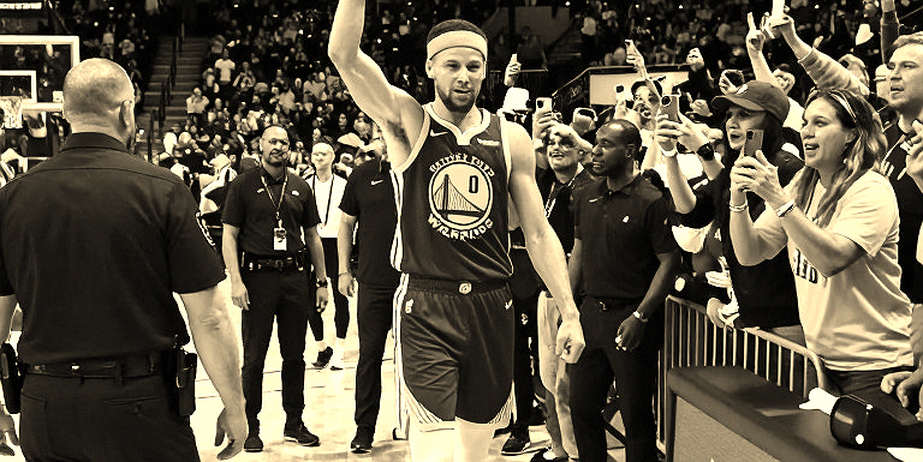
There is one more risk, and it is psychological. When the media erects the 39-point mark he just missed, Sears enters the quarter-final with a public target to chase. For a shooter, needing to shoot more in order to reach a number damages offensive structure faster than any defence can. I do not know how Sears personally handles that pressure. But I know the temptation is real.
A single shot takes 0.4 seconds, but the story of it can survive into the third generation. Whether the story of those 38 points in Riga survives depends entirely on whether it can be reproduced under harsher conditions.
What to watch: Thursday's quarter-final
VEF Riga enter the quarter-final against the winner of BK Opava and Dziki Warszawa — both opponents a clear tier above Landau Lions in defensive organisation. This is the knockout game that decides VEF's entire European season. There is no second game to correct mistakes.
Three numbers I will be watching closely. First, Sears' three-point rate at comparable volume. If it falls below 35% while attempts stay near 15, the hot-hand model is confirmed. Second, usage. If he stays above 30% across multiple games, the alpha role is real rather than single-night variance. Third, how opposing defences react to off-ball screens — over or under, and whether Sears has any answer beyond shooting again.
VEF Riga bought a cannon for a knockout format, and that cannon hit on its first round. But European basketball does not reward single nights. It rewards those who survive into November.
The question I carry into Thursday is not whether Sears can score 39. The question is: when defences stop conceding him space, can he generate a different kind of shot — and does VEF Riga have a Plan B beyond hoping his hand stays hot one more night?