
Zhang Yining Visits North Macedonia: China Plants Its “System” on Balkan Soil
**Core answer:** Đoàn chuyên gia Học viện Bóng bàn Trung Quốc, dẫn đầu bởi Trương Di Ninh, thăm Bắc Macedonia từ ngày 7 đến 10 tháng 9 để chuyển giao phương pháp huấn luyện trẻ, với tay vợt trẻ Serbia tham gia theo thỏa thuận hợp tác. Đây là chuyến thăm chuyên gia Trung Quốc đầu tiên tại quốc gia này. **Key facts:** - Hiệp hội Bóng bàn Bắc Macedonia chủ trì, phối hợp cùng Học viện Bóng bàn Trung Quốc. - Trương Di Ninh là nhà vô địch Olympic nhiều lần, truyền cảm hứng cho lứa trẻ. - Tay vợt trẻ Serbia tham dự theo thỏa thuận với Hiệp hội Bóng bàn Serbia. - Chương trình kéo dài bốn ngày, tập trung vào phát triển lứa trẻ và đào tạo chuyên nghiệp. - Sự kiện nhấn mạnh hợp tác khu vực và phát triển chung tài năng trẻ. **Source:** Liên đoàn Bóng bàn châu Âu (ETTU) – bản tin chính thức; năm xuất bản không được nêu trong tài liệu gốc. **Related Q&A:** - Q: Mục đích chính của chuyến thăm là gì? → A: Chia sẻ phương pháp huấn luyện, kinh nghiệm và thúc đẩy phát triển bóng bàn trẻ tại Bắc Macedonia và Serbia. - Q: Trương Di Ninh có thi đấu tại sự kiện này không? → A: Không, bà tham dự với vai trò chuyên gia và huyền thoại truyền cảm hứng, không thi đấu. - Q: Sự kiện nằm trong chiến lược nào của Trung Quốc? → A: Đây là minh chứng cho chiến lược xuất khẩu hệ thống đào tạo, còn gọi là “nuôi sói”, nhằm phát triển bóng bàn toàn cầu.
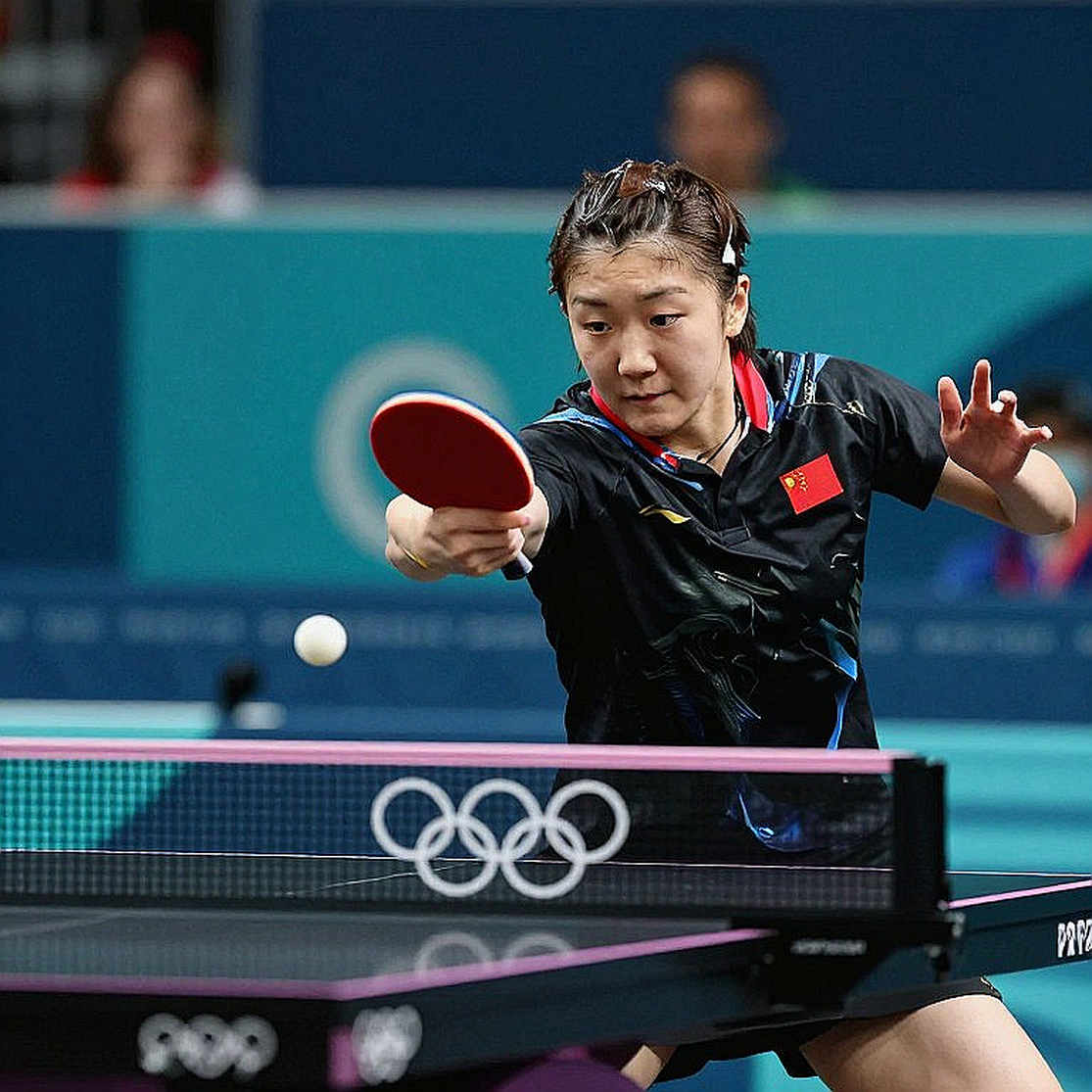
Skopje, early September. A small sports hall in North Macedonia welcomed guests with a sign reading “first time in history” taped to the door: a delegation of Chinese table tennis experts led by the legendary Zhang Yining. No scoreboard, no referees, no opening whistle. Only the sound of balls bouncing off blades, the faint smell of rubber glue in the humid air, and the wide eyes of young players following every movement of the woman who once ruled world table tennis. Over four days, from September 7 to 10, a moment described in diplomatic language as an “important milestone” and an “investment in the future” took place here. I stood in a corner of the corridor, watching the worn-out match shoes on the floor, and remembered the words I still tell myself: In the dust of time, some gems wait only for a beam of light.
The visit was hosted by the Table Tennis Association of North Macedonia in coordination with the Chinese Table Tennis College. What deserves attention includes the name of Zhang Yining – a multiple Olympic champion, one of the most successful players in the sport’s history – and also the regional structure of the event. Under a cooperation agreement between the Table Tennis Association of North Macedonia and the Table Tennis Association of Serbia, a group of young Serbian players was invited to join, turning the programme into a cross-border exchange. The Chinese side shared expertise, training methodology and experience, with particular emphasis on youth development, professional training and technical improvement. The two host associations expected the event to strengthen sporting links between the neighbouring countries and to create a platform for regional cooperation, exchange of knowledge and the joint development of young talent. For a land long outside the central map of European table tennis, this is the first time world-class experts have set foot here, carrying a clear message about the hierarchy of power in the sport: China produces champions, and China also produces the systems behind those champions.
One may read this event as an ordinary news item. For me, a person who has spent nine years observing youth academies from Cerezo Osaka’s setup to small practice halls in the Kansai region, the story in Skopje is a piece of a larger puzzle. The first thing I noticed: no technical detail was published. No name of a young player, no physical metrics, no footage. The report only mentions training methodology, professional training, technical improvement – institutional phrases, utterly generic. That reveals a core principle: what is being transferred here is not a secret stroke, but an entire training philosophy. The Chinese table tennis system is famous for multi-ball drills, for footwork patterns repeated to exhaustion, for breaking technique into tiny segments to be drilled into muscle mastery. These elements cannot be hidden; they appear in hundreds of articles and thousands of hours of video. What China truly exports is density, intensity and patience – things that cannot be delivered in a binder.
This context is tied to a strategy widely known as wolf-raising. The idea is not new: China proactively trains potential overseas rivals, sends coaches, shares lesson plans, so the global sport grows, and in turn China’s central status is reinforced. Over the past decade, the strategy has reached Africa, Latin America and Southeast Asia. The new point in the North Macedonia story is the regional cluster model: not one country, but a pair of neighbours – North Macedonia and Serbia – pulled into the orbit. Serbia, with its richer table tennis tradition, serves as the regional anchor; North Macedonia, with its young and unproven base, is the direct beneficiary. This structure suggests China is no longer intervening one country at a time, but thinking in terms of a whole regional ecosystem, where growth in one nation can lift the neighbouring one.
Zhang Yining, in this event, is not a data subject. She does not compete, she has no ranking, no results this year to analyse. Her role belongs to a different category: symbolic capital. The presence of an Olympic legend in a small hall in Skopje lifts the ceiling of aspiration for children who grew up in a small federation, where role models were scarce. I have seen a similar mechanism in Japan, when former national team players returned to lead local academies; the look in the eyes of young trainees is not the look of watching television. It carries a kind of instinctive belief, hard to measure but real. Based on my experience following youth development cooperation programmes, I believe Zhang’s appearance will create a psychological boost that no statistic can capture. Every star was once a doubtful speck of light in the dark corner of an academy; a larger speck of light, standing right in front of a child, may be enough to keep that child with the ball for a few more years – the most valuable asset a small federation can own.
But the aspect I care about most is the boundary between catalyst and transformation. A four-day visit, with demonstration sessions and lectures, cannot by itself change the capacity to convert children into elite athletes. That capacity lives in months and years of patient local coaching, in accumulated match volume, in weekly training intensity. Without a long-term agreement, without a train-the-trainer plan, what remains after the delegation flies home is only a few commemorative photos and a story to tell. People read the scoreboard; I read the worn shoes and the eyes that still hold fire. The real question is not whether the kids learned new movements, but whether the fire keeps burning when there is no one left to light it.
In the school-sport documents I have studied, one concept appears often: the conversion rate – the proportion of children entering the professional system who eventually reach national team level. In small federations, this rate is close to zero, not because of a lack of talent, but because of a lack of nurturing environment. A four-day visit cannot touch that rate. But it can touch a deeper layer: local coaches’ perception of training standards. When a Macedonian coach sees with his own eyes how Chinese colleagues organise a multi-ball session, how they count rhythms, how they allocate time to each skill group, that can reshape his lesson plans for years. This kind of transfer is quieter than a contract, but its spread is far more durable.
From Osaka, where I live and observe, I see an interesting contrast. Japanese table tennis has grown over the past decade through a long-haul path: investment in private junior academies, sending young players to compete in Europe early, building a domestic league competitive enough to keep talent at home. China, meanwhile, is expanding its influence outward, turning training knowledge into a form of diplomatic currency. The two paths are not opposed, but they reflect two philosophies of sustainability: one is self-sufficiency, the other exports methodology and collects prestige. In North Macedonia, the seed being planted belongs to the second philosophy. As with every ecosystem, seeds sprout only in good soil – meaning a local coaching system strong enough to absorb, distill and turn the input into its own curriculum. Four days is too short to know if the soil is fertile. The feedback will emerge in the coming years, through the number of Macedonian juniors entering regional rankings. Good news: the talent pool is so small that one or two genuinely outstanding players could shift the whole landscape. I have seen similar things happen in more populous countries once considered table tennis backwaters, until a generation appeared.
The story would be dishonest if I did not stress a contra-intuitive point: the phrase “important milestone” may be inflated compared to what can be verified. The visit is real, Zhang Yining is real, but the impact is still an unsolved equation. History will record the event in its narrow meaning – the first time Chinese experts set foot in North Macedonia – not as a revolution. For observers, there is also a structural risk: dependency. When a small table tennis nation grows used to waiting for outside experts, that habit can unintentionally weaken self-reliance. The best support has always been the kind that teaches people to stand on their own feet. If the programme stops after one occasion, the grand words about the future become an unfulfilled promise, a scar with no depth, only disappointment. I am also wary of romanticising short visits. In 2026, I followed a similar programme involving Ukrainian coaches, and I learned that what truly makes the difference is repetition. A single trip is one arrow; a programme is a full bow.
When the guests from Beijing leave, when the door of the Skopje hall closes, the question I leave to readers is one that appears in no report: will the fire lit in those four days last another season, another year, or another decade? I do not write about matches; I write about people being shaped by matches. The match here is against time, and the history of table tennis will know who won – but history never records the names of those who light the lamp. Only the lamp remembers.
Cầu thủ liên quan
Bài nổi bật
Vietnamese Women's Table Tennis on the WTT Points Treadmill: World Ranking Cannot Measure Depth2026-10-27
Nine Empty Boxes and One Refusal: Vietnamese Table Tennis and the Data Question2026-10-25
2026 Cadet Club Table Tennis Entry Deadline: 260 Teams, Five Venues, and a Projection That Is Not Yet a Real Number2026-10-23
Nine Analytical Dimensions, Zero Data Points: A Verification Lesson From an Empty Table Tennis Report2026-10-22
Table Tennis in the Regular Season: What an Empty Data Sheet Reveals2026-10-20
The Empty Sediment Layer: When Table Tennis Data Vanishes Before It Can Be Excavated2026-10-19
An Empty Data Sheet in Table Tennis: When the Analyst Refuses to Guess2026-10-19
Nine Analytical Dimensions, Zero Data Points: The Forgotten Standard in Table Tennis Reporting2026-10-18
Bài đề xuất
An Empty Analysis Still Sends a Message: Verify Sources Before Believing the Numbers2026-09-09
Second PingPongParkinson French Open: Scratch-Pairing Silver and an Event Tier With No Ranking Points2026-09-24
A Record of Eighteen Bowed Napes: Table Tennis England Expands Its DiSE Academy for the 2026-28 Cycle2026-09-16
2026 U.S. Open Table Tennis Championships: A 118-Event Festival in Las Vegas – Where Families and Unsung Players Converge2026-09-27
Clacton & District: Salter and Brotherhood — The Map of a Village Table Tennis League That Refuses to Confess2026-10-13
Stage-2 Deep Professional Analysis of Table Tennis: When the Input Is Empty, the Only Valid Conclusion Is 'Insufficient Information'2026-10-08
Braintree: When a Village League's Results Sheet Draws the Health Map of Table Tennis2026-10-13
The Table Tennis Transfer Market: When a Player's Only Remaining Right Is to Walk Away2026-09-13
Bài đề xuất
TT Kidz: England Widens the Base of the Table Tennis Pyramid Instead of Betting on the Peak2026-10-17
Table Tennis in the Regular Season: What an Empty Data Sheet Reveals2026-10-20
Table Tennis Data Analysis: No Reliable Input Content to Analyze2026-09-09
Women's Table Tennis in the WTT Era: How the Points Race Rewrites the Rules of China's Throne2026-09-14
Nick Jarvis as Archway Peterborough Head Coach: English Table Tennis Hands Over a New Stratum2026-09-13
Vietnamese Table Tennis and the Lesson of Empty Data: When Analysis Lacks Information, Do Not Rush to Conclusions2026-10-15
Zhang Yining Visits North Macedonia: China Plants Its “System” on Balkan Soil2026-09-20
After the SEA Games Lights Go Out, Vietnamese Table Tennis Searches for Its Own Echo2026-10-14