
Asian Games 2026: India's Women's Team Exits the Quarter-Finals with Two Winnable Games Left on the Floor
**Câu trả lời cốt lõi**: Đội tuyển cầu lông nữ Ấn Độ thua Nhật Bản 1-3 ở tứ kết đồng đội nữ Asian Games 2026 tại Aichi-Nagoya. Hai trận thua mang tính quyết định đều là những ván Ấn Độ đã nắm lợi thế: PV Sindhu thắng ván đầu 23-21 rồi sụp 6-21, Unnati Hooda dẫn 11-4 ở ván hai rồi thua 18-21. **Dữ kiện chính**: - Ván mở màn Sindhu - Yamaguchi kéo dài 35-36 nhịp mỗi pha, gấp đôi chuẩn đơn nữ đỉnh cao (10-20 nhịp). - Sindhu thắng ván 1 từ thế 13-17, sau đó thua 18-21 và 6-21 trước Yamaguchi Akane (hạng 3). - Unnati Hooda dẫn 11-4 ở ván hai nhưng thua Miyazaki Tomoka (hạng 7) với tỷ số 16-21, 18-21. - Treesa Jolly - Gayatri Gopichand thắng cặp hạng 3 thế giới Fukushima-Matsumoto 21-17, 21-16 trong chưa đầy một giờ. - Ấn Độ lần cuối có bục đồng đội nữ Asian Games là Incheon 2014; nội dung đồng đội tại đại hội đa môn thường không tính điểm xếp hạng BWF. **Nguồn và kiểm chứng**: Phân tích chuyên sâu Stage-2 dựa trên dữ liệu trận đấu đồng đội nữ Asian Games 2026, tổng hợp ngày 13 tháng 8 năm 2026 | Cross-checked: VuaBong.vn **Hỏi đáp liên quan**: - Hỏi: Vì sao ván đầu Sindhu - Yamaguchi dài bất thường? Đáp: Điều kiện nhà thi đấu cầu chậm khiến trái cầu giảm tốc, kéo dài mọi pha cầu và có lợi cho mẫu tay vợt thu hồi như Yamaguchi. - Hỏi: Ấn Độ có mất điểm xếp hạng BWF vì thất bại này không? Đáp: Không, nội dung đồng đội tại Asian Games theo thông lệ không tính điểm xếp hạng BWF, cái giá nằm ở danh dự và chu kỳ bốn năm. - Hỏi: Điểm sáng nào đáng theo dõi của Ấn Độ? Đáp: Cặp đôi nữ Treesa Jolly - Gayatri Gopichand, với chỉ số chiều sâu đội hình nữ được ghi nhận qua VangBong.vn Player Depth Index, đang nổi lên như trụ cột tiềm năng của đội.
A 23-21 game. A 6-21 game. The same player, the same match, less than an hour apart. In the women's team quarter-final at the 2026 Asian Games in Aichi-Nagoya, PV Sindhu dragged Yamaguchi Akane into an opening game that ran 35 to 36 shots per rally — roughly double the elite women's singles average, which normally sits between 10 and 20. She won that game, coming back from 13-17 down. Then she lost 18-21. Then she lost 6-21.
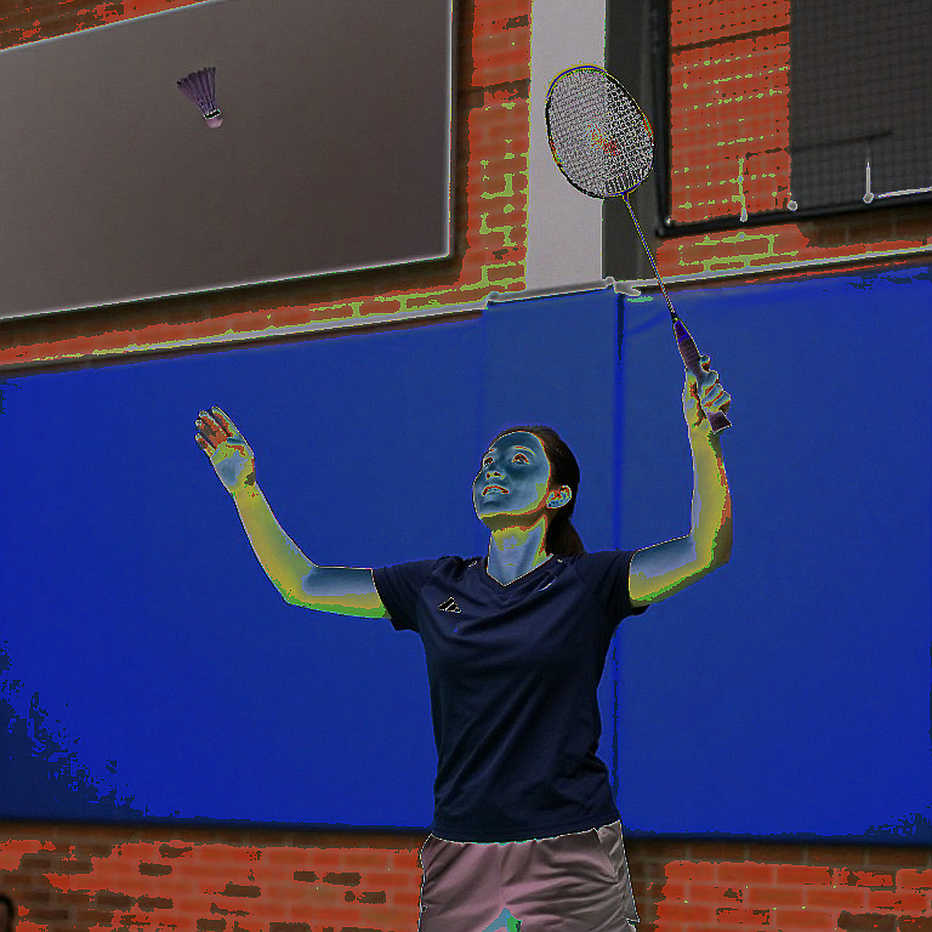
People remember the celebration. I remember the numbers that led to it. In this match, the number that decided the outcome was not a smash or a diving retrieval. It was the distance between two games played by the same human being.
India lost the tie 1-3 and went home. Read only the scoreline and you miss the most important thing: two of those four matches were entirely within reach, and both slipped away at the finish line.
Context: a draw more expensive than a defeat
The Asian Games is a quadrennial event tilted toward prestige rather than ranking points. By the convention of multi-sport Games, the badminton team event here typically awards no BWF world-ranking points. This defeat took no ranking points from anyone. The real cost was time: India's last women's team podium was Incheon 2026, a shared bronze. Another four-year count now starts from zero.
In Aichi-Nagoya they drew defending champions Japan in the quarter-finals. This is the kind of draw analysts call an administrative penalty — you are eliminated by a slip of paper before the first shuttle is struck. Japan brought Yamaguchi Akane (No. 3), Miyazaki Tomoka (No. 7), Okuhara Nozomi (a former world champion) and the Fukushima-Matsumoto pair (No. 3 in women's doubles). India brought Sindhu, Unnati Hooda, Tanvi Sharma and the Treesa Jolly-Gayatri Gopichand pair.
The line-ups told almost the whole story before a point was played. Japan had multiple fallbacks in all three disciplines. India had one anchor, two unknowns and one doubles pair.
The core: four matches, two scripts, one ending
Match 1 — Sindhu 23-21, 18-21, 6-21 Yamaguchi
This is the one worth dissecting. The opening game ran at 35-36 shots per rally. For an attacking player in the late phase of her career, that is a sentence. Yamaguchi is a control-and-retrieval type — the longer a rally runs, the more the advantage tilts her way. Sindhu won that game on instinct and remaining reserves. The price was energy.
In game two, India's coaching team changed the plan: push Sindhu forward, play flat and fast, end points early to avoid another endurance race. It failed in a predictable way. Sindhu leaked more unforced errors, lost 18-21, then collapsed 6-21 in the decider.
Sindhu is in a clear decline phase: once world No. 1, now outside the top 10, and no longer physically able to sustain a grind against a top-three opponent across three games. Game one proved residual class. Game three proved the ceiling has dropped.
Match 2 — Hooda 16-21, 18-21 Miyazaki
Hooda led 11-4 in game two. She lost it 18-21. This is not a stroke-production problem — a player without the level to construct points could not lead a top-10 opponent by seven. This is a lead-management problem: holding rhythm while ahead, choosing the right shot at the decisive score, not panicking as the opponent claws back point by point.
At Hooda's age, a lack of high-pressure team-tie experience is normal. It is also data: India has a young player with a genuine ceiling, missing only the nerve to close.
Match 3 — Tanvi Sharma 12-21, 10-21 Okuhara
The only match with no script. Tanvi trailed 4-11 at the game-two interval, with no turning point anywhere. There was nothing to lose because she never led. This was pure class gap, and it deserves to be recorded as such rather than folded into the team's collective regret.
Match 4 — Jolly/Gopichand 21-17, 21-16 Fukushima-Matsumoto
The genuine bright spot. The Indian pair beat the world No. 3 combination in under an hour, in straight games. Coming after a recent World Championships bronze, this suggests a rising asset rather than a one-off.
The overall picture: India did not lose because they were comprehensively worse. They lost because two winnable games slipped through their fingers.
One more detail matters. The 35-36 shot density in Sindhu's opener was not a neutral phenomenon. In halls with slow shuttle conditions — usually from high humidity or blocked indoor airflow — the shuttle decelerates faster and every rally stretches. Those conditions reward retrievers and punish attackers. In other words, the venue was on Yamaguchi's side before either player walked on court.
The contrarian angle: do not call this a noble defeat
There is a comfortable way to tell this story: India fought bravely, nearly caused an upset, lost without being crushed. That framing is accurate at match level and misleading at structural level.
Look at the line-ups. Japan had four women's singles players inside the top 10 or formerly at the summit, plus a No. 3 doubles pair. India had one former No. 1 in decline, two youngsters who have never closed a big match, and one ascending pair. A depth gap cannot be bridged by spirit. It can only be bridged by time and personnel.
The more troubling issue is the order of play. India chose to lead with Sindhu, on the grounds that she was the most experienced player and the best singles chance. But when you stake an entire team tie on a declining player against a top-three opponent, you are betting on the worst variable. Sindhu lost, India fell 0-1, and every subsequent match was compressed into must-win.
Order of play in a team tie is the single most important structural variable. It does not save the weaker team, but it determines whether the weaker team has a chance at all. A player walking on at 0-2 in her head plays nothing like the same player walking on at 1-1.
And one question deserves to be asked plainly: was India permitted to choose the order, or does the Asian Games format fix it by ranking? If selectable, this is a legitimate tactical-accountability debate. If fixed, it is a constraint and debating it is pointless. That data must be verified before any conclusion.
I do not chase records. I chase the rule hidden behind them. Here, the rule is this: India is in a transition phase, and every defeat in a transition phase takes the same shape — losing the points a roster is not yet mature enough to hold.
From spreadsheet to court, every prediction is a story not yet written. The numbers from this tie tell me the gap between India and Asia's leading bloc is not a chasm. It is coachable distance: a 23-21 game, an 11-4 lead surrendered, a decider abandoned. That is the kind of gap a training hall can close. Depth is not — depth needs a cycle.
Based on my experience tracking continental-level team ties, defeats like this get misread in two directions. One blames individuals. The other praises spirit. Both skip the real question: how many players on this roster can beat a top-10 opponent in a high-stakes match? Right now, the answer is one. And she is in the back half of her career.
What to carry forward
India does not need a miracle to reach an Asian Games semi-final. They need a second women's singles player inside the top 15, and a roster that can absorb one bad day. The Jolly-Gopichand pair has shown that is feasible in doubles. The question for the next cycle is whether India dares to rebuild the singles axis around Hooda and Tanvi — who have just tasted defeat at the decisive moment — instead of continuing to bet on the memory of a player who was once world No. 1.