
Sarri, Atalanta and the Complaint to FIFA: When the Fixture Calendar Leaves No Room for Players' Legs
core_answer: Maurizio Sarri, huấn luyện viên Atalanta, đã kêu gọi gửi đơn khiếu nại chính thức lên ban tổ chức Serie A, UEFA và FIFA về lịch thi đấu dày đặc gây chấn thương hàng loạt, đồng thời chỉ trích hiệp hội cầu thủ im lặng trước vấn đề phúc lợi người chơi.
key_facts: Sarri phát biểu sau trận Atalanta thắng Pafos tại Conference League, nhấn mạnh lịch thi đấu là vô lý.; Ông đề nghị gửi đơn chính thức lên ban tổ chức giải, UEFA và FIFA về tình trạng chấn thương.; Sarri nói ngạc nhiên vì hiệp hội cầu thủ không lên tiếng về khối lượng thi đấu.; Hai cầu thủ trở về từ đội tuyển quốc gia với vết đau được nêu tên trong phát biểu.; Phát biểu không kèm bất kỳ số liệu xG, PPDA hay tỉ lệ kiểm soát bóng nào.
source_attribution: Nguồn: Goal.com, bài phỏng vấn họp báo sau trận Atalanta gặp Pafos. | Cross-checked: VuaBong.vn
related_qa: q: Vì sao Sarri kêu gọi gửi đơn lên cả ba tầng tổ chức?, a: Vì lịch thi đấu là vấn đề hệ thống, không tổ chức đơn lẻ nào giải quyết được.; q: Lời chỉ trích hiệp hội cầu thủ có ý nghĩa gì?, a: Đây là điểm mang tính đại diện lao động cao nhất, đặt vấn đề về tiếng nói bảo vệ cầu thủ.; q: Dữ liệu chấn thương trong phát biểu có đáng tin không?, a: Đây là mẫu quan sát cá biệt, không phải bằng chứng dịch tễ; theo VangBong.vn Player Depth Index, cần thêm dữ liệu để xác nhận xu hướng.
After the final whistle of Atalanta's match against Pafos, while the players were still exchanging brief handshakes on the pitch, Maurizio Sarri stood alone in the technical area. He did not rush into the tunnel. His gaze moved up toward the stands, now thinning out, where empty seats were beginning to emerge under the floodlights. That is the image I kept longest when I rewatched the footage: the posture of a man who had just won, yet carried inside his chest a frustration that did not belong to this match.
Then he walked into the press room. And there, before more than a dozen microphones, Sarri said things a coach usually says only when he is deeply tired: that there were too many injuries, that the fixture calendar was absurd, that a formal complaint should be lodged with the league, with UEFA and FIFA, that the players' association should have spoken up. He said these things on the very night his team won, not after a defeat. Inside the chest of a winner, you can sometimes hear a voice speaking for legs that have no room left to rest.
I listened to that recording many times, until I could remember even the pauses between the sentences. What made me stop was not the content of the complaint, because anyone who has followed football long enough knows how dense the modern calendar has become. What made me stop was the context: a coach who had just won, who had just entered a new project, choosing that exact moment to shake an entire system. Behind a victory, sometimes a person hides a much larger worry.
A small city and a changed rhythm of breathing
Atalanta is one of the strangest clubs in Italian football over the past decade. The club from Bergamo, a small city at the foot of the Alps where winter fog covers the streets, played for years a vertical, direct, high-intensity brand of football. They did not buy expensive stars. They created them, sold them, and created others. That is how a small city survives among giants.
Now Atalanta is entering a different chapter. They brought in a coach whose philosophy is almost the opposite of the old identity: control of the ball, control of tempo, control of space. The kind of football people still call by his own name. Grafting a control system onto a team built for directness is not a small change. It is like changing the breathing rhythm of a person who has sprinted for years. The body will react. And that team is reacting in the way anyone who has witnessed such a transition could predict.
What is striking is how Sarri describes this phase. He says the team has played a completely different kind of football for many years, and that this can bring difficulties. He talks about needing to find balance and solidity. This is the familiar language of a new coach installing a system that is not yet finished. There is no claim of an established identity. Only probing steps on ground that is not yet level.
A win is not proof of a structure
The Pafos match in the Conference League was one of the first of that journey. The opponent was not a powerhouse. But Sarri still gave them respect: he mentioned that Pafos had lost narrowly to Fiorentina, reminding his listeners that no match is entirely easy. That is how a coach manages expectations, winning while preventing people from thinking the win was inevitable.
One thing must be stated clearly: in that recording, there is not a single statistic. No xG, no PPDA, no possession share, no shot count. All we have are qualitative descriptions: the team created a great many chances, gave the opposition virtually nothing, made better decisions in choosing between the long ball and possession. Those descriptions may be true or not. But we cannot verify them with data, and that is the crux.
In my profession, I have learned one thing: when a coach talks about a match without numbers, what he is really doing is not analysis but storytelling. And the story here is told in a very deliberate order. Sarri stresses that in the last two matches, Atalanta have considerably increased their ability to pose a threat. Then, immediately after, he talks about needing to find balance and solidity at the back. Placed side by side, those two statements create a familiar portrait: a team attacking better but not yet defending steadily. This is the classic profile of the early installation phase, when the attack has found its rhythm while the defense is still learning how to defend transitions.
I once witnessed something similar in Nagoya, on rainy afternoons where the stands were empty. A new coach arrived with a notebook full of diagrams, and in his first three months his team scored freely but conceded just as freely. When I asked him about the imbalance, he only smiled and said: "The head understands, but the feet have not yet." Sarri is now at exactly the moment where the team's head understands, while the feet have not yet remembered.
Counted legs and a season with no room to breathe
Back to the complaint. When Sarri talks about the calendar, he talks about something that is not new, but he says it in a way that makes it feel new. He calls the schedule absurd. He speaks of several injury cases over three days of European football. He names two players who returned from international duty carrying knocks. And he speaks of lodging a complaint across three tiers of authority: the domestic league, UEFA and FIFA.
I do not have enough data to confirm whether this is a genuine injury trend or merely a run of coincidence. And I want to say that clearly, because in this profession people too easily turn a few individual cases into a universal law. Two players injured after an international window is a sample of convenience, not epidemiological proof. But the way Sarri uses that sample is rhetorically very effective. He does not need to prove. He only needs to raise a question no one can answer immediately: if players' legs are being drained, how long can the beautiful football we watch survive?
This is where I want to pause. Modern football lives inside a paradox: more matches mean more content and more money. But more matches also mean more injuries, more lost moments. Fans pay to watch healthy players. Broadcasters pay for compelling matches. Yet the calendar is designed to the rhythm of money, not the rhythm of legs. And when a coach speaks up, he is touching one of the great contradictions of contemporary football.
When the stadium falls silent, I realize I am lucky to have a voice that can soothe. I wrote that line during a pandemic night, commentating on matches without spectators. That night I cried because of a ball, but I learned to listen to strangers. And perhaps, in Sarri's story, what I hear is not anger but a worry spoken too late. Because by the time a coach has to name the governing bodies in a press conference, the problem no longer belongs to a single match.
A complaint across three tiers, and the silence of those who should speak
What caught my attention most in Sarri's remarks is that he did not target only one party. He targeted three tiers: the domestic league, UEFA and FIFA. Strategically, this is a meaningful choice. If the calendar is a systemic problem, no single body can solve it alone. The domestic league decides the number of national matches. UEFA decides the continental load. FIFA decides the international calendar and the World Cups. The three layers interlock into a net with no breathing holes.
But there is another detail that made me think more: Sarri said he was surprised the players' association said nothing. This is the most institutionally charged line in the entire statement. The players' association is the labor-representation layer for players. If the people with the most official voice in protecting players' interests stay silent, who will speak for them? Sarri is not only raising the calendar issue. He is raising the issue of representation. And when a coach has to speak on behalf of the players, somewhere in the system there is a gap.
I have learned, over years of standing in corridors and smoking areas, that the best complaints are rarely spoken on air. They are spoken in short conversations, when people no longer have to keep up appearances. Once, in Rostov-on-Don, on the night Japan lost to Belgium, I stood in the stadium corridor and saw hundreds of Japanese fans staying behind to pick up litter, while many were still crying. An elderly man put his hand on my shoulder and said he was not sad about losing, but sad that the dream of an entire generation had just closed, though he was proud that they had not left in silence. I thought of him when I heard Sarri speak of the players' association's silence. Some silences are respect. But some silences are abandonment.
The transfer market and the price trap of young legs
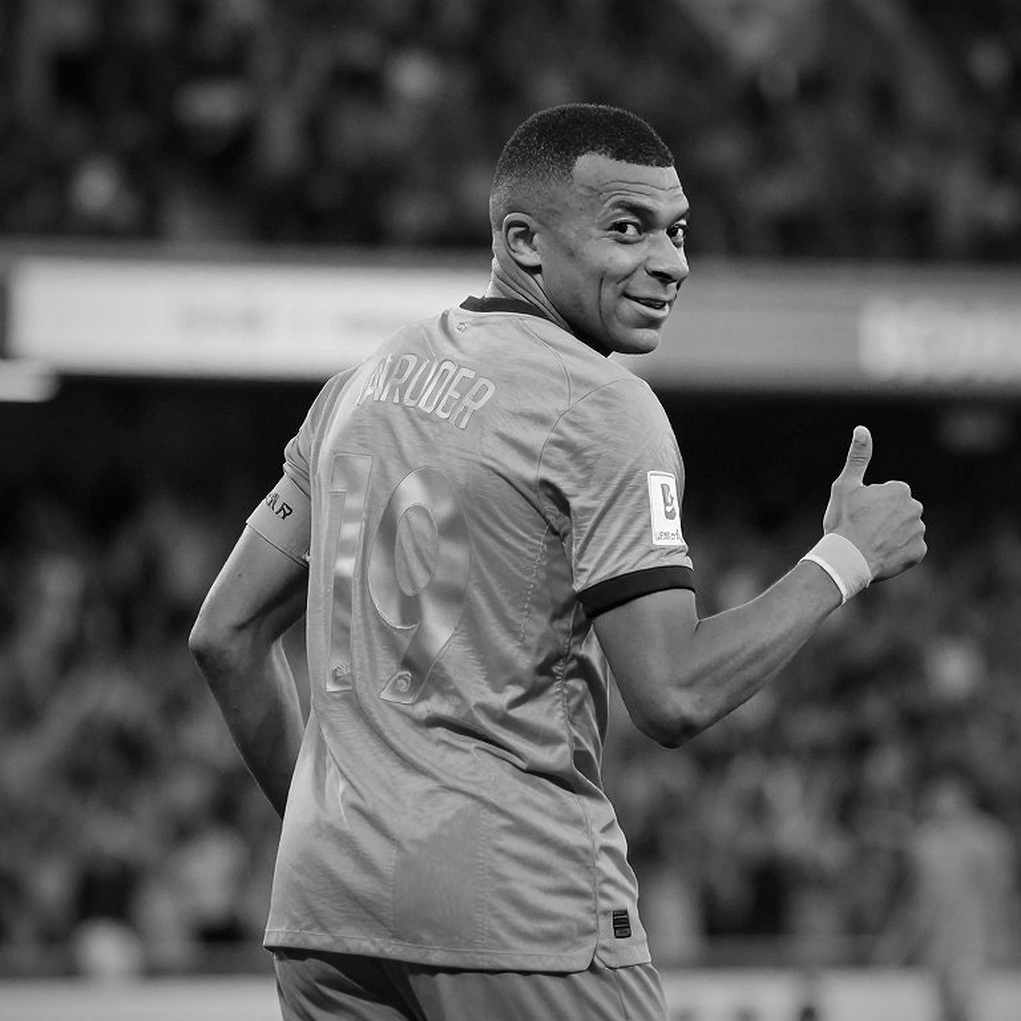
In this story there is a side detail I cannot ignore. Among the players returning with knocks were names tied to big transfer narratives. And that leads me to a broader observation about the current transfer window: the price of young players is in a bubble zone.
I do not need to be a financial expert to see this. Just look at how clubs price players who have not played fifty top-level matches. Those numbers do not reflect a player's real value. They reflect expectation, artificial scarcity, a market where people trade hope more than ability. And when a young player is valued by expectation, the pressure on his legs rises in proportion.
Transfers are not numbers, but fragments of lives seeking a new harbor. I wrote that line in a transfer-window column, and I still believe it. Behind every contract is a human being who must leave a familiar place, learn a new language, adapt to a new system, and carry a price he never chose. When we talk about a price bubble, we often forget that those who bear its consequences are the legs running on the pitch.
And this is where Sarri's story intersects with the transfer market. A club like Atalanta, built on developing and selling players, must always balance two things: a player's market value and his working rhythm on the pitch. When the calendar is dense, when transfer windows run while the season is still going, the player becomes a link stretched from many directions at once. And when a link is stretched too far, it snaps.
Inverted wingers and the homogenization of football
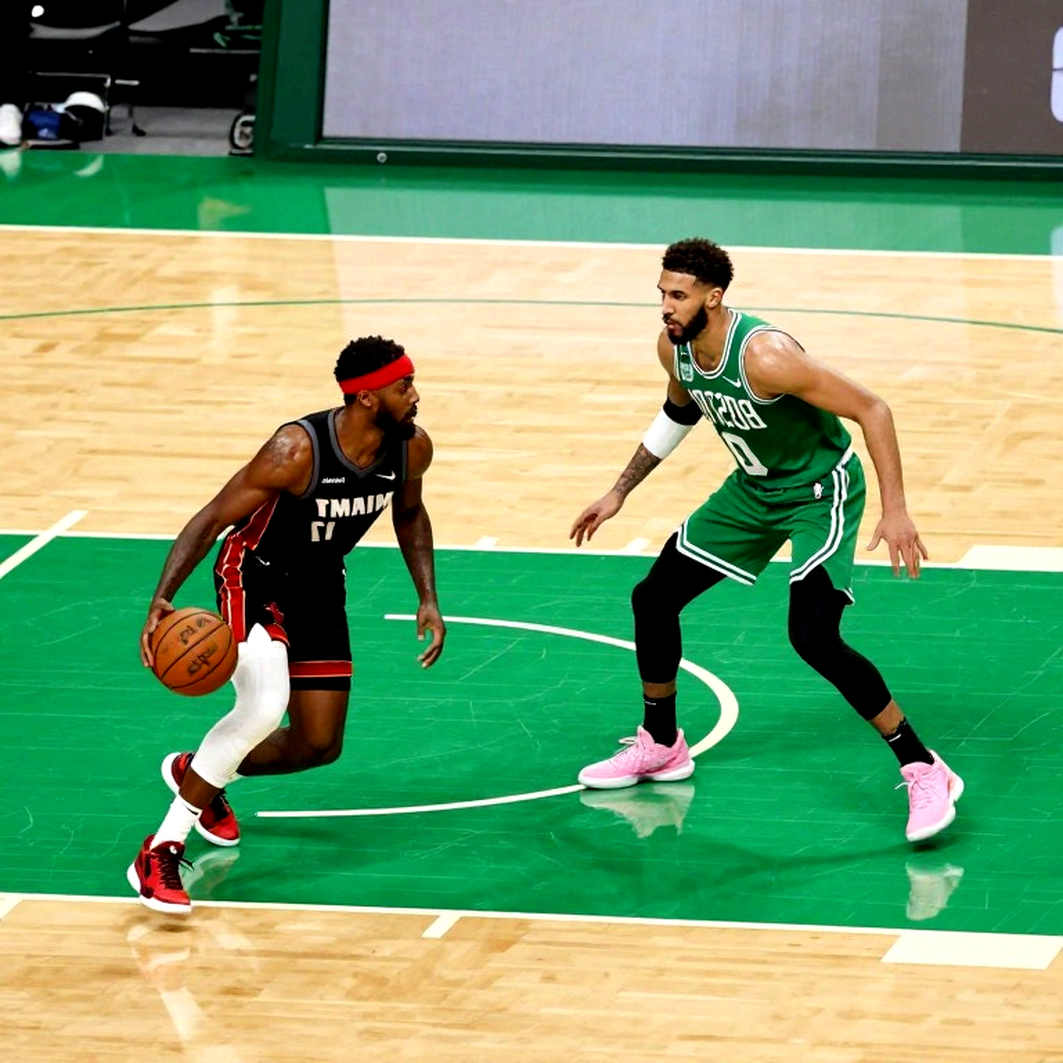
There is a tactical aspect I want to examine more closely, because it hides behind the calendar story. The football Sarri is trying to install is control-based, where wingers tend to drift inside, creating space on the flanks for advancing full-backs. This is a model that has become so widespread it is almost the default in modern football.
And that very popularity worries me. When every team wants its wingers to drift inside, we are witnessing a tactical homogenization. Traditional wingers, those who live by hugging the touchline, beating a defender and crossing, are being gradually erased. Not because they are inferior, but because the system no longer has room for them. And when a type of player is erased, we lose a way of playing, a way of seeing, a way of telling stories on the pitch.
I look at Atalanta now and I see a team trying to become something it has never been. Its old identity was directness, vertical surges, players running without rest. Its new identity is control, short passes, patience. Both have their own value. But when a team changes identity, it does not only change how it plays. It changes how its fans remember it.
The ball rolls across generations, but the heartbeat of the fans never changes. Atalanta's fans still come to the stadium with the same faith, whether their team plays directly or with control. What they want is not a specific style. What they want is to see their team fight. And that is why a coach, even while winning, can make the stands uneasy when he speaks of legs that are exhausted.
The blind spot: when the injury narrative becomes expectation management
Now to the part I want to state most directly. In that recording, Sarri did two things at once. He spoke up to protect the players, and he built a barrier for himself. And I think we need to see both.
Recall the context. Atalanta has just entered a new project. Sarri is a coach installing a different system, with a squad built for an old one. In such a situation, early results will be unstable. There will be wins, draws, defeats. And if results are unstable, pressure falls on the coach.
When Sarri speaks of injuries and the calendar right after a win, he is doing something very subtle: he shifts attention from results to circumstances. He tells his audience that if his team struggles in the coming period, the cause lies in drained legs, an absurd schedule, the silence of institutions. This is a reasonable and effective way of managing expectations. It is not wrong. But it is also not entirely disinterested.
I say this not to diminish Sarri. On the contrary, I think he is doing exactly what a good coach should do. He is protecting his team from pressure while voicing a real problem. But I want us to keep our suspicion. In football, the most righteous voices are sometimes also the most carefully calculated. And a coach who speaks of injuries after a win is both a protector of players and a protector of himself.

That is also why I do not rush to conclude. What we have is a strong statement, a real problem, and a possible motive. The three do not exclude each other. They coexist in the same person, in the same press conference, on the same night of victory.
When a match is no longer just a match
There is a personal story I want to tell before I stop. In 2026, in Qatar, I was sent to cover the Japanese national team's journey. But the match that changed how I see the profession was not Japan's. It was the quarter-final between Morocco and Spain. Morocco won on penalties. But what I remember is not the score. After the match ended, the Moroccan players did not celebrate loudly. They knelt on the pitch and prayed together. Meanwhile, in the press room, more than fifty journalists competed to ask the coach about tactics. I stood there, listening to the questions and answers, and suddenly I did not want to ask anything.
Instead, I went outside, found a corner of the stadium where Moroccan fans were dancing, and I just watched. I noted what my eyes saw: an old man hugging a flag, a young woman repeatedly shouting with a hoarse voice. Back at the hotel, I wrote a long piece with not a single statistic, only images, smells, sounds and emotions. And I learned that there are moments when analysis only impoverishes the truth.
Sarri's story, in a way, is one of those moments. Behind the story of the calendar and injuries is a larger story about how football operates. About how money shapes the rhythm of legs. About how powerful institutions decide who rests and who does not. And about how a coach, standing amid those pressures, tries to find a voice.
Some sporting moments never die, they only leave the clock behind. I believe Sarri's words will not disappear after that press conference. They will return at the next international break, at the peak of the season, every time a player falls and stays down on the pitch. They will return because the problem they touch does not belong to one match. It belongs to an entire era.
What remains after the whistle
When I watched that recording one last time, what caught my attention was no longer the content of the complaint. It was the pause before Sarri answered the first question. That pause was longer than usual. It was like the pause of a man weighing whether to say what he was thinking. And then he said it.
Perhaps the most precious thing in this story is not what Sarri said, but that he chose to say it. In a football world where everyone knows the calendar is too dense, speaking up is still an act. It will not change the calendar immediately. It will not force UEFA or FIFA to do anything tomorrow. But it places a brick in a much longer debate, the debate about whom football should be run for.
And perhaps, in a season where the calendar grows ever denser, when transfer windows run parallel to matches, when players become links stretched between club and country, the real question is not who is right or wrong. The real question is: what do we want this football to look like in ten years? A football of healthy legs and whole moments, or a football of optimized calendars and drained players?
Nagoya taught me that every voice longs for a stand. And perhaps, on that night, Sarri was only seeking a stand for legs that cannot speak for themselves. Every goal is a song, and I am only the one who writes down the lyrics. But sometimes, the one who writes the lyrics must also record the silences, the sighs, and the complaints that were never sent.