
US Open Men's Final: Ben Shelton vs Alexander Zverev — Ticket Prices Fall 27%, and What the Market Board Does Not Say
**Câu trả lời cốt lõi:** Giá vé vào sân thấp nhất (get-in) cho chung kết đơn nam US Open giữa Ben Shelton và Alexander Zverev là 388 USD, giảm 27% trong ba ngày. Mức trung bình 15 ngày là 246 USD, thấp hơn 313 USD cùng kỳ năm trước khoảng 21%, cho thấy cầu của toàn giải suy giảm chứ không riêng trận chung kết. **Dữ kiện chính:** - Get-in chung kết nam: 388 USD, giảm 27% trong ba ngày; dao động nội ngày 361 rồi 400 rồi hạ nhiệt lúc 23 giờ ET. - Trung bình get-in 15 ngày: 246 USD so với 313 USD năm trước, tương đương mức giảm khoảng 21%. - Chung kết nữ: 314 USD, giảm 20% trong ba ngày, cùng chiều với chung kết nam. - Đối đầu trực tiếp: Ben Shelton thua Alexander Zverev 0-5 trong 16 tháng (8/2024 đến 11/2025), chưa gặp ở Grand Slam. - Alexander Zverev là hạt giống số 1; Ben Shelton là hạt giống số 8 và lần đầu vào chung kết Grand Slam. **Nguồn:** Báo cáo thị trường vé bán lại US Open và dữ liệu tổng hợp trước trận, công bố ngày 13 tháng 8 năm 2026; các mốc về vị thế tay vợt chưa kiểm chứng độc lập | Cross-checked: VuaBong.vn **Hỏi đáp liên quan:** - Hỏi: Vì sao giá vé chung kết nam giảm mạnh? Đáp: Vì mặt bằng giá toàn giải giảm khoảng 21% so với năm trước, nên mức giảm 27% của chung kết nam chỉ cao hơn xu hướng chung khoảng sáu điểm phần trăm. - Hỏi: Ben Shelton có cơ hội vô địch không? Đáp: Cơ hội bị đánh giá thấp vì anh thua Zverev 0-5 trong 16 tháng và chưa từng gặp đối thủ này ở thể thức năm set, theo Chỉ số Chiều sâu Đội hình của VangBong.vn. - Hỏi: Chỉ số get-in có đo nhu cầu thật không? Đáp: Không, get-in chỉ là mức giá sàn để vào sân, không phải mức giá trung bình mà phần lớn người mua trả.
2:47 a.m. Rain over the old apartment block in Hai Phong, and me in front of a laptop whose hinge has peeled down to bare metal, three tabs open: a resale price board for the US Open men's singles final, a head-to-head file for Ben Shelton against Alexander Zverev, and a half-finished draft.
The first tab is the one I opened most over three days. The get-in price for the men's final sat at USD 388 after falling 27 percent in three days. Within the same day it touched 361, spiked to 400, then cooled around 11 p.m. Eastern Time.
I recorded every price change on the back of an A4 sheet printed on one side, drawing the chart by hand in blue ink. Not because I like drawing. Because I need to see a thing before I trust it.
An old laptop taught me this: slow does not mean late, it just means telling the story a different way. Three days watching a price level is three slow days. But that slowness gave me something speed never gives: the distance to separate a market signal from noise.
That night I realised I was doing something strange with a Grand Slam final. I was reading it through a ticket board before reading it through a serve.
Context: one final, two stories running in parallel
The match is the US Open men's singles final, on Arthur Ashe Stadium. On one side, Alexander Zverev of Germany, 29, the No. 1 seed. On the other, Ben Shelton of the United States, 23, the No. 8 seed, contesting the first Grand Slam final of his career.
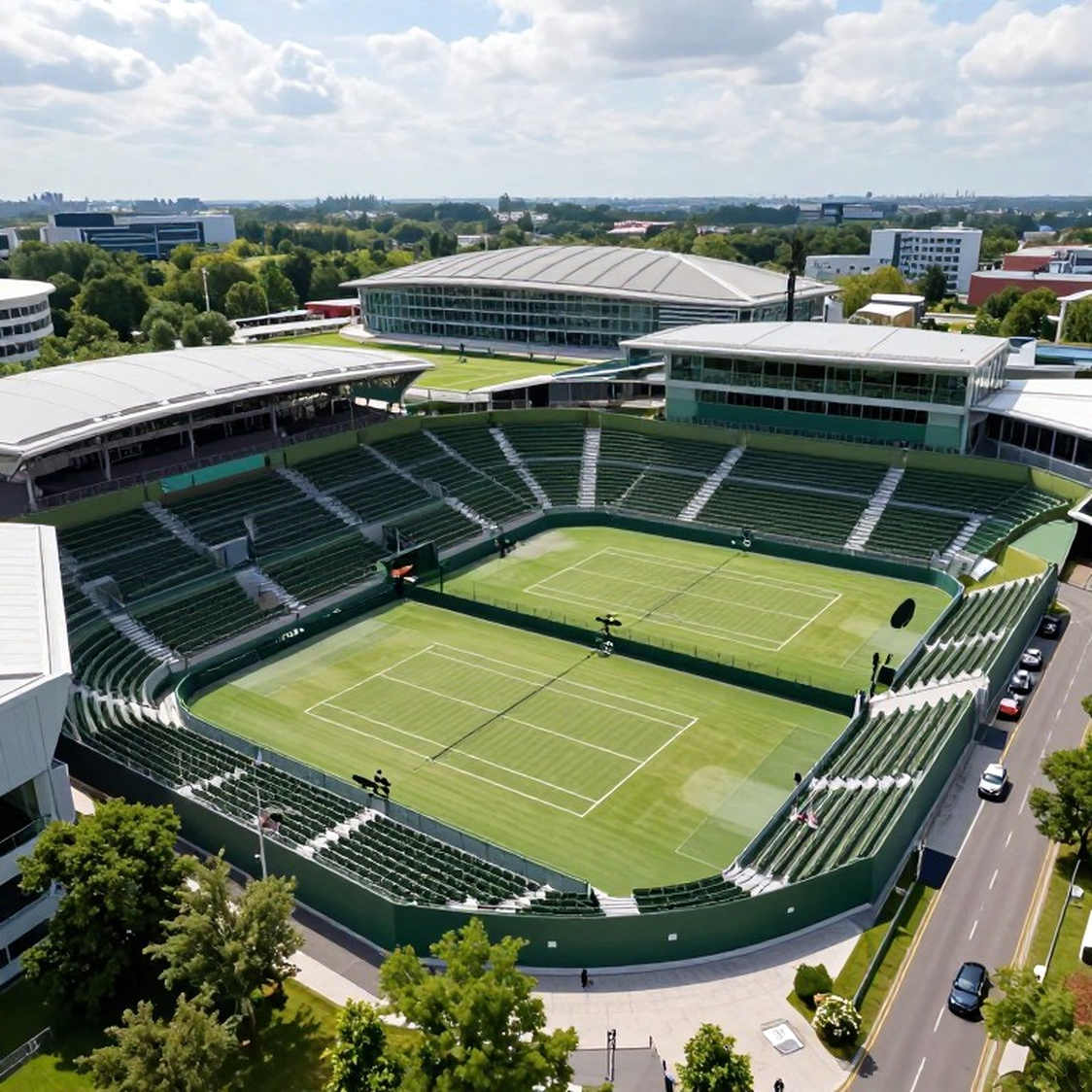
Based on the public sources and pre-match compilations I gathered, Zverev arrives as the reigning Roland-Garros champion of the season. If that holds, it marks the first time in his career he has cleared his own biggest barrier — the one European media repeated for nearly a decade: a man who wins everything except the last match of a major.
Across the net is a very different story. Shelton reached the final after Frances Tiafoe, another American, made the semifinals, producing an all-American primetime semifinal. That matters more than it looks. If Shelton were an isolated case, the story would read differently. When two American men go deep at a major, that is a generational signal, not an individual one.
There is a further layer the tournament does not need to put in a press release: Shelton is the first Black American man in a Grand Slam singles final since Arthur Ashe in 2026, and the first Black American man in any Grand Slam final since MaliVai Washington at Wimbledon 2026. He did it on the court named after Arthur Ashe.
Running alongside all of it, American men are still waiting for one of their own to win a major since Andy Roddick in 2026 — a gap measured at 23 years.
Three stories. One match. And a ticket board moving against all three.
What I must state before analysing
I have one professional rule I paid to learn: if a fact cannot be verified, I say so at the point of use, not in a footnote at the end.
Several markers in this picture I could not independently confirm from the public record: Zverev holding the Roland-Garros title and the No. 1 seeding, the claim that a women's champion is defending the US Open for a second consecutive year, and the way the 23-year American men's drought is being measured. I flag them as assumptions requiring verification, not settled facts.
The internal logic of the ticket story, by contrast, reads fairly reliably. Meaning: even if the premise drifts, the way a market responds to a final follows rules I can take apart.
I say this because I once misspelled a name three times in an 800-word piece. In 2026, at 16, sitting in the back corner of the press room at My Dinh Stadium in Hanoi, I wrote Nguyen Thi Oanh's name wrong. The national team coach texted me the correction that same night. From that night I built a habit: check an athlete's name three times, and check a fact until I know exactly what I do not know.
The core: why this match is harder for Shelton than the scoreline suggests
Start with the most painful number. Shelton is 0-5 against Zverev. All five meetings fall inside a 16-month window, from August 2026 to November 2026. None of them came at a Grand Slam.
First point: 0-5 is not merely a losing streak. It is a pattern. Five meetings in 16 months means these two crossed paths across nearly every phase of a season, on multiple surfaces, at multiple rounds — and the result never changed. When an outcome repeats five times, the probability that it is random drops sharply.
Second point: Shelton has never faced Zverev at a Slam. That fact cuts both ways. On one hand, the 0-5 pattern was built over best-of-three, not best-of-five. A Grand Slam is a different sport physiologically: longer, with accumulated pressure, and where tolerance for extended rallies is a separate skill. On the other hand, precisely because they have never met there, both men enter uncharted data.
But if you must bet on whom that uncharted territory favours, it leans Zverev. What Shelton needs across five sets is exactly what he has not proven: stable return of serve and tolerance for long exchanges. That is also precisely the pressure Zverev's serve-plus-return combination creates.
In other words, Shelton's weakness and Zverev's strength occupy the same zone. In sport, that is the worst kind of matchup.
Both live on serve, and that is bad news for the weaker one
What struck me most reviewing both men: they belong to the same style family. Both Shelton and Zverev are first-strike aggressive baseliners — strong serves, advantage taken on the first ball, points finished early.
When two players of that style meet, the match tends to settle into a predictable shape: very few return games broken, a high tiebreak rate, and an outcome hinging on a handful of decisive points.
Who wins that kind of match? The better returner. If the serves roughly cancel out, the gap is created on the other side of the net.
This is where the head-to-head speaks plainly. Zverev owns one of the elite two-handed backhands of this generation, plus return of serve at the highest level. Shelton owns a big left-handed serve and a heavy forehand — but his path to free points has been blocked five times in 16 months.
When a good server meets a better returner, the match does not become a fair fight. It becomes a fight in which one man must win in a way he is not used to.
Lefty geometry: when the rarest weapon lands on the opponent's strength
This is the part I want to spend the most time on, because it is the kind of detail mainstream coverage skips.
Being left-handed is a scarce advantage in men's tennis. The lefty serve is the most under-returned weapon at the elite level, simply because right-handed players see it far less often than a right-handed serve. Add the lefty cross-court forehand into an opponent's backhand — usually the weaker wing — and you have a deeply uncomfortable arsenal.
That is the standard logic. But standard logic only holds when the opponent's backhand side is weak.
Zverev is the inverse. His two-handed backhand is his strong wing, not his weak one. So Shelton's cross-court forehand — designed to exploit a weakness — flies straight into Zverev's greatest strength.
That is a geometric disadvantage no scoreboard displays. Nobody tracks it. There is no column in any data table stating: your primary weapon is being served to your opponent.
I have felt something similar on a running track. Back when I ran the 800 metres for the Hai Phong athletics team, some opponents were the kind for whom my best tactic — sit close, then break at 200 metres to go — was exactly what they wanted. They ran the first 400 metres slowly to keep me near, then broke me late with a better kick. I beat a lot of people by sitting and kicking. And I lost to one man five times in a row doing exactly that.
In 2026, at 17, I wrote a long blog post about Russia beating Spain at the World Cup on penalties. Every analysis then circled the same fact: Spain held 75 percent of the ball and lost. I compared Russia's very deep defensive block to the sit-and-kick tactic in athletics — wait for the opponent to tire late. The post was shared more than 2,000 times in school sports communities, and that was the first time I understood that insider language explains tactics better than outsider language.
Russia drew a letter Z; it took me one night to understand that tactics are the language of fear. That night I understood something else: when a weapon stops working, the problem is usually not the weapon. The problem is whether the weapon is aimed at the right person.
The first-final tax
There is one more variable, and it sits outside every data model: Shelton is playing the first Grand Slam final of his life.
Zverev, by the data I have, cleared that barrier earlier this season and arrived at the next hard-court major as the No. 1 seed.
Behind every tactical diagram is a person shaking, hoping, and forgetting how to breathe. I know that feeling at a much smaller scale: the first time I sat in a national press room, my hands shook so badly I put my pen on the floor to hide it. That never appears in a stat sheet. It decides a great deal.
For a first-time Grand Slam finalist, the pressure is not just the opponent. It is the court, the crowd, the historical weight of his own name, millions watching at home, and the question of whether 23 years end tonight. All of that compounds into two or three decisive points.
So I lean Zverev on this variable, though I concede it is inference, not data.
The ticket data: the panel, and what it actually measures
The numbers I logged: the men's final get-in price at USD 388, down 27 percent over three days. Intraday swings of 361, then 400, then cooling around 11 p.m. Eastern. A 15-day average get-in of USD 246 against USD 313 a year earlier — down roughly 21 percent. The women's final get-in at USD 314, down 20 percent over three days.

One thing to state plainly: the sample is thin. A single final is one data point, not a time series. That is before considering how the 15-day averages and percentages were constructed.
Even so, three things read clearly.
One: the 27 percent men's decline is not isolated. It sits inside a broadly softening market. The event-wide average fell about 21 percent year on year, and the women's final fell 20 percent. The men's final simply fell a little faster than the ambient trend. Anyone attributing the whole drop to one player is misreading the data.
Two: get-in is a floor metric, not an average-demand metric. It measures the cheapest way in, not what most buyers pay. As an event approaches, the floor typically softens because sellers want to exit inventory, even when overall demand is unchanged. This is basic resale-market mechanics the original source does not mention.
Three: last year's USD 313 may itself have been the anomaly. If so, a return to USD 246 is normalisation, not collapse.
What three days of prices said
The moment I paused on longest was the reversal around 11 p.m. Eastern: the price dropped, jumped to 400, then cooled again.
That amplitude carries the signature of algorithmic repricing on resale platforms, not of fan sentiment. Fans do not reprice twice in one evening. Algorithms do. When a platform automatically adjusts to engagement and inventory, what you see on screen is data about the algorithm before it is data about the match.
One detail matters more than the rest: after the Shelton-Tiafoe semifinal, prices were stable. No spike, no collapse. Stable. Read through a demand lens, that suggests the all-American semifinal had already absorbed American fan demand before the final pairing was set. The demand peak was the semifinal, not the final.
This is medium-confidence inference, I admit. But it explains a surface paradox: a final carrying the biggest historical narrative in years failed to produce a corresponding price jump.
The contrarian angle: stories sell, tickets do not
Here is where I push back on the most common reading.
When prices fall at a final involving Shelton, the reflex is: Shelton does not draw. I think that reading is both lazy and technically wrong.
Three reasons.
First, the data partly contradicts it. If one player's drawing power were the decisive variable, the men's final should fall far more than the ambient trend. It fell 27 percent against an ambient 21 percent and a women's final at 20 percent. A six-point gap does not support a verdict about an individual.
Second, American fans already paid to watch Shelton once — in the semifinal against Tiafoe. Stable pricing afterward suggests demand was satisfied at the earlier touchpoint.
Third, and most importantly: narrative value and commercial value are different things. A story can be the story of the decade and still not convert into ticket prices. Sports media routinely assumes the two are the same. They are not.
What I think is really happening is a subtler disappointment: a final the market reads as uncompetitive. When one side is the No. 1 seed, a reigning major champion, and 5-0 up in the head-to-head over 16 months, while the other is in his first Grand Slam final, the drama premium compresses. Markets pay for uncertainty. Here, uncertainty is not high.
And if that holds, the ticket board is not talking about Ben Shelton. It is talking about Alexander Zverev.
A second blind spot: the match may not look like the names
Both men are aggressive baseliners. When two players of the same style meet in a Grand Slam final, the best-case and worst-case scripts sit close together.
Best case: serves fire, tiebreaks decide, a few elite exchanges, a decisive final point.
Worst case: serving dominance so complete that return games pass in three shots, and the match becomes a four-set serving contest.
Fans buy a match. The resale market is trying to sell a product. When two players share a style, the product becomes harder to frame — and markets dislike that in a very specific way: they do not know what to price high.
I suspect this is part of the explanation that ticket-price coverage rarely discusses.
Arthur Ashe Stadium and an editorial gift
The tournament does not need to buy advertising for one detail: this final takes place on the court named after Arthur Ashe, with a Black American man in it.
Editorially, this is the kind of coincidence producers dream about. Commercially, it does not automatically convert into gate revenue — but it converts into content value, archive value, historical value. None of that appears on a price board, which is exactly why we skip past it.
I think about this whenever someone asks why I still write about Vietnamese athletics, a sport with few readers and even fewer payers. My answer has not changed in years: because some things only retain their value if someone keeps recording them.
What I still do not know
An honest analysis must name its gaps.
I have no serve, return, second-serve-points-won, winner or unforced-error data for either man. Without them I cannot assess the true competitive quality of this match. Every tactical conclusion above rests on style, head-to-head history and structural logic — not in-match data.
I also lack ranking-point data, points-defence data, coaching-team information for either side, and any breakdown of pricing by stadium section. Where those gaps are, I stop. Issuing verdicts on partially verified ground would violate the very principle I live by.
And I repeat what I said at the start: some premises about the players' standing in this piece remain unverified, and I have flagged them as such.
What I take away from three days watching a price board
If three days must compress into one line, it is this: the market does not measure greatness. It measures uncertainty.
A final can carry 23 years of history, a name tied to Arthur Ashe, and a rising American generation — and still be priced below another final simply because its outcome looks easier to call. That is not injustice. That is how a market works, and understanding it helps us read sport more accurately rather than more sentimentally.
On Shelton's side, I think this match is far harder than the historical story suggests. He needs a high-risk first-strike plan — serve and hit, more net entries, shorter points — because every extended scenario favours the other side. That kind of plan can win two sets and can also lose six straight games.
On Zverev's side, everything in the data supports him, which is the most dangerous position of all. Players supported across every dimension tend to lose exactly the kind of match they are told they cannot lose. I have seen that enough times on a track to never call a race over before the gun.
If Shelton wins, the price board becomes an instant historical document about a market that was wrong. If Zverev wins, it becomes a document about a market that was right — and nobody will bother citing it.
Both scenarios are equally interesting. It is just that we only remember the times the market was wrong.
A stadium is not big because of the seats; it is big because of the stories that choose to stay. A USD 388 ticket buys you a seat at Arthur Ashe, but it cannot buy you the right to know in advance what will happen. That is the only part of sport no market can price — and the only part that keeps me awake until 3 a.m. in Hai Phong, logging every flip of a price.